ISLAMABAD: Non-registered Virtual Private Networks (VPNs) will stop working after the Nov 30 deadline for their registration, the Pakistan Telecommunication Authority (PTA) chairman told a Senate panel on Monday.
In his briefing to the Senate Standing Committee on IT and Telecom, retired Major Gen Hafeezur Rehman made a distinction between commercial VPNs used by businesses and non-commercial ones, through which individuals access blocked content.
Mr Rehman said the telecom regulator was only registering commercial VPNs.
The committee members questioned if PTA had the legal authority to block non-commercial VPNs.
Senate panel seeks legal view on regulator’s authority to block VPN use by individuals
Responding to a query about the status of non-commercial VPNs after Nov 30, the PTA chief said individuals “should not access unauthorised social media apps or websites through VPNs”.
The lawmakers questioned PTA’s power to block VPNs of non-commercial users and sent the query to the law ministry for comments.
Senator Afnanullah questioned the legality of the Interior Ministry’s letter to PTA to block VPNs. He said VPNs do not fall under the umbrella of social media apps.
The committee has asked the attorney general to clarify the status of VPNs.
Senator Afnanullah said the Prevention of Electronic Crimes Act, 2016, does not allow the blocking of VPNs under any circumstances.
The meeting, chaired by Senator Palwasha Khan, discussed reasons for internet disruption across the country.
The PTA chairman asked Senator Khan to hold an in-camera briefing over the VPN issue and suggested that the secretary interior may also be called for that meeting.
The senator said regular internet disruptions have jeopardised the professional future of around 2.5 million freelancers in Pakistan.
Senator Afnanullah also criticised the PTA and IT ministry over internet outages that caused business loss and “stressed” users.
Some of the committee members even asked PTA officials if these restrictions had any political motives. However, they negated the perception.
CII’s statement
The committee members also criticised the Council of Islamic Ideology’s (CII) statement declaring the use of VPNs un-Islamic. They said the body should also ban TV and mobile phones as they display harmful content.
The lawmakers sought the basis for the CII’s judgement, but the officials declined to comment on the matter.
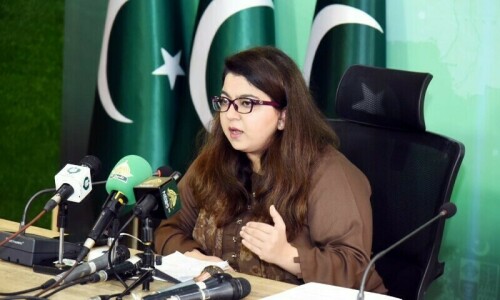
The committee members were also miffed at the absence of IT minister Shaza Fatima Khawaja from the meeting.
It was noted that the minister has skipped the 3rd consecutive meeting of the Senate committee.
The committee decided to write a letter to the prime minister, highlighting the minister’s “inability” to defend the decisions of her ministry.
Published in Dawn, November 19th, 2024