COUNTRIES, big and small, are gathering today in Baku, Azerbaijan, for COP29.
Pakistan’s participation in the climate summit will centre on three daily events at its pavilion, focusing on climate justice, energy transition, and gender-responsive climate policies. We will showcase our commitment to climate adaptation and sustainability with national initiatives such as the Living Indus project and Recharge Pakistan. However, the real challenge lies in securing meaningful financial support for these programmes.
Never has it been more urgent to take climate action. While developed nations are trumpeting a rise in international public adaptation financing from $22bn in 2021 to $28bn in 2022, the truth is it is a meagre increase. For Pakistan alone, the World Bank estimates a need of $348bn by 2030 for climate resilience. Add to this the current pledges to the Loss and Damage Fund, which stands at a mere $770m, and it is clear that global financial commitments are grossly inadequate.
Senator Sherry Rehman’s call for ‘Internationally Determined Contributions’ from developed nations in aid of climate-vulnerable countries deserves serious consideration at COP29. The fact is that countries like Pakistan, which hardly contribute to global emissions, bear disproportionate climate impacts. The devastating floods of 2022, causing $30bn in damage, and this year’s severe cross-border smog in Punjab show our vulnerability to sudden disasters and chronic pollution.
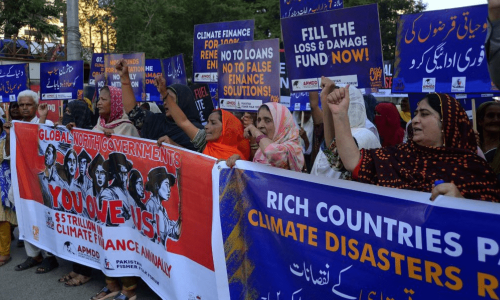
This year’s discussions will focus on creating a new climate finance goal that surpasses the previous $100bn annual commitment set by the Paris Agreement. Developing nations are advocating for climate finance to be provided with major concessions or as grants, instead of the typical loans, to alleviate their growing debt burdens. Azerbaijan’s proposed $1bn Climate Finance Action Fund, funded by fossil fuel producers, aims to support disaster response and community initiatives, offering a fresh approach to financing.
Pakistan’s government seems to be concerned about our participation at the summit. The parliamentary committee on climate change has stressed transparency and measurable outcomes. In the long run, success will require more than just government action. The private sector must be engaged and provincial climate initiatives strengthened.
The Global Climate Finance Framework, already signed by 15 nations, offers Pakistan an opportunity to strengthen its position in climate negotiations. Pakistan must leverage its moral authority as a climate-vulnerable nation while displaying a serious commitment to adaptation and mitigation at home.
Published in Dawn, November 11th, 2024