Modi rejects lawmakers’ calls to restore occupied Kashmir’s partial autonomy


 0
0


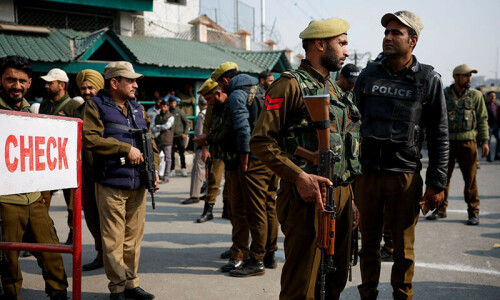
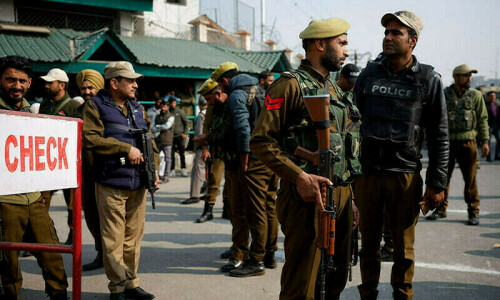
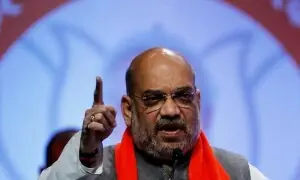
Indian Prime Minister Narendra Modi strongly backed his government’s contentious 2019 decision to revoke the partial autonomy of Indian-occupied Kashmir (IoK), days after the territory’s newly elected lawmakers sought its restoration.
“Only the constitution of Babasaheb Ambedkar will operate in Kashmir… No power in the world can restore Article 370 (partial autonomy) in Kashmir,” Modi said, referring to one of the founding fathers of the Indian constitution.
Modi was speaking at a state election rally in the western state of Maharashtra, where Ambedkar was from.
Modi’s Bharatiya Janata Party (BJP) government revoked partial autonomy in 2019 and split the state into the two federally administered territories of Jammu and Kashmir and Ladakh — a move that was opposed by many political groups in the Himalayan region.
IoK held its first local election in a decade in September and October and the newly-elected lawmakers passed a resolution this week seeking the restoration.
The territory’s ruling National Conference party had promised in its election manifesto that it would restore the partial autonomy, although the power to do so lies with Modi’s federal government.
IoK’s new lawmakers can legislate on local issues like other Indian states, except matters regarding public order and policing. They will also need the approval of the federally-appointed administrator on all policy decisions that have financial implications.
Under the system of partial autonomy, IoK had its own constitution and the freedom to make laws on all issues except foreign affairs, defence and communications.
The troubled region, where separatists have fought security forces since 1989, is India’s only Muslim-majority territory.
It has been at the centre of a territorial dispute with Pakistan since the neighbours gained independence from British colonial rule in 1947.
Kashmir is claimed in full but ruled in part by both India and Pakistan, which have fought two of their three wars over the region.