Anthropologist challenges traditional discourses on photography



KARACHI: The opening ceremony of the third edition of the Social Sciences Winter School in Karachi on ‘Questioning Society Through Image, Film & Sound’ was held at the Institute of Business Administration (IBA), City Campus on Monday where scholars gave presentations and read papers on photography, community engagement and the anthropology of sound.
Prof Christopher Pinney, professor of anthropology and visual culture at the University College London, gave an engaging presentation, ‘On Medium Specificity, Or What’s Photography Got to Do With It?’ He said that for the last several decades, photography has been largely discussed under the shadow of ‘power’, ‘culture’ and ‘identity’ where there has been little room for questions of skill, craft, art and semiotics. “But what makes photography different from other media?” He asked.
Sharing some arguments on the subject by Walter Benjamin, Roland Barthes and Ariella Aisha Azoulay, he tried enhancing understanding of the photographic practices of today. He spoke of disturbances that photographs create. “The potential to disturb opens up spaces,” he said. “When a photograph disturbs, it doesn’t take up the slack of existing phantasms or illusions,” he added.
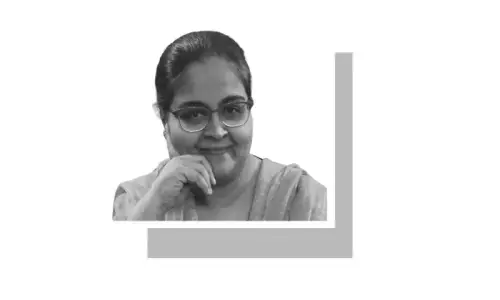
Saima Zaidi, a well-known communication designer, who is also the founder and director of Numaish-Karachi, an award-winning interdisciplinary collective, gave a presentation on ‘Collective Memory: Community Engagement through Visual Interventions’ in which she demonstrated the impact of diverse cultural assimilation over several millennia, which allowed a glimpse into lived cultures and their impact on people and places.
Ms Zaidi spoke about curatorial projects in Lahore, Shikarpur and Karachi which showcase heritage, craft traditions and promote healthy exchanges among those who get to see them, be they people of different age groups, genders, ethnicity or socio-economic backgrounds. “Shared experiences in these public spaces are a good idea for community engagement, which is very important. People are given a chance to revisit, re-imagine and reclaim,” she said. “When you give space to people, they actually respect that and take ownership of that space,” she pointed out.
Social Sciences Winter School kicks off at IBA with focus on image, film & sound
Dr Nicolas Puig, a researcher in anthropology at the Institute of Research for Development at the Université Paris Cité spoke about the ‘Anthropology of Sound: Approaches and Knowledge through Sonic Relationships’.
Suddenly, the audience was treated to various sounds played by the anthropologist. There were bird songs, fish sounds, sounds of fireworks, sounds of footsteps and explosions from all over the world that have become the focus of attention for researchers in ecology and social sciences.
Dr Puig explained how the anthology of sound emerged in the 1970s from a dual tradition, that of ethnomusicology and that of musical listening to the world’s harmony. “Then approaches diversified to encompass a range of sound-related practices, relations and perceptions,” he said while talking about the approaches developed by anthropologists working on sonic relations and methodologies.
Earlier, in his welcome address, the Executive Director of IBA Dr S. Akbar Zaidi said that every year they work in collaboration with academics from foreign countries for the Winter School. “The process of working with foreign collaborators from France, the United Kingdom, Sri Lanka, China, etc., is a great way of interacting between civilisations and learning together,” he said.
Trainers at the Winter School, Geographer Dr Remy Delage and Emeritus Director of Research at the French National Scientific Centre, France (CNRS) and member of the Centre for Study of South Asia and the Himalayas (CESAH) Dr Michel Boivin also spoke on the occasion and thanked IBA, the French Embassy in Islamabad and Colombo and the Alliance Francaise de Karachi for their support of the Winter School.
Published in Dawn, November 5th, 2024