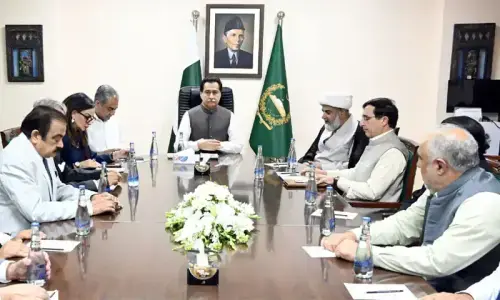
KHUZDAR/QUETTA: A political and tribal jirga was held in Khuzdar on Thursday to discuss Balochistan’s security concerns, rising terrorist attacks and the pressing issues affecting citizens, including health, education, unemployment and administrative challenges, and to review steps taken by the government to normalise the situation.
The jirga was significant due to the presence of high-ranking officials, including Chief Minister Sarfraz Bugti, Commander of the 12 Corps Lt Gen Rahat Naseem Khan, tribal elders, political party leaders and members of civil society. Ministers, the chief secretary and other senior administrative officials also participated.
Participants addressed various concerns, including the root causes of increasing terrorism. They stressed that unemployment and the closure of the Iran border, along with the suspension of Iranian petroleum supplies, was fuelling anxiety among the youth and pushing them towards negative influences.
A senior official told Dawn that the Khuzdar jirga was part of a Balochistan government initiative to hold such gatherings across all eight divisions of the province to engage directly with the people, offering them a platform to discuss their grievances and to understand the government’s efforts to resolve the challenges faced by citizens.
During the jirga, CM Bugti and Lt Gen Naseem assured the participants that the government was committed to solving their problems.
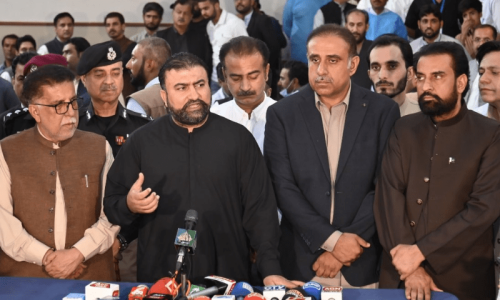
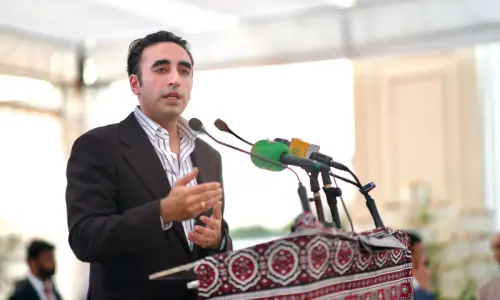
Speaking at the gathering, Mr Bugti remarked that issues in Balochistan were long-standing, and the government was determined to resolve them through political dialogue. He stressed that the government’s doors were open for meaningful talks with those willing to engage under the framework of the Constitution. However, he condemned the killing of innocent labourers who come to the province to earn a living, labelling it as both regrettable and unacceptable.
“The government is committed to a coordinated, organised and transparent approach for the welfare and prosperity of the people,” Mr Bugti said, adding that the administration has developed a plan to promote various sectors, including education and health.
He emphasised that merit-based job creation and an effective accountability system were key priorities to ensure public funds were utilised genuinely for the people’s welfare.
Stressing that Balochistan’s people were patriotic, Mr Bugti said they were eager for development and supported the government’s vision for progress. He announced a policy to send youth abroad for education, with steps already underway to prepare a new generation equipped with higher education.
Mr Bugti assured that the Balochistan government would not compromise on merit or transparency and reaffirmed its commitment to resolve issues through dialogue. “Those who challenge the authority of the state will be dealt with through constitutional means,” he warned, adding, “It is up to the people of Balochistan whether they want to see their children holding pens or Kalashnikovs.”
The chief minister acknowledged the multiple challenges facing the province, including terrorism, unrest and climate change. He said the provincial government was also making efforts to improve educational access for Baloch youth and has reopened many schools that had been closed.
Mr Bugti also underscored the importance of decentralising authority to lower levels of government to address public issues effectively, strengthening local institutions.
Commander of the 12 Corps, Lt Gen Naseem, emphasised the importance of education for Balochistan’s youth, urging them to focus on learning to better tackle future challenges. He noted that thousands of positions were available for Baloch youth in the Frontier Corps and the Pakistan Army, encouraging them to join the armed forces and serve the nation.
The jirga, attended by public representatives, civilian and military officials, tribal elders, political leaders and members of minority communities, witnessed robust participation.
Among those present were Provincial Minister for Irrigation Sadiq Umrani, Leader of the Opposition in the Balochistan Assembly Younis Aziz Zehri, Jhalawar Awami Panel Chief Shafiqur Rehman Mengal, National Party leader and former senator Abdul Kabeer Muhammad Shahi, Inspector General of Police Moazzam Jah Ansari and other officials.
Published in Dawn, October 18th, 2024