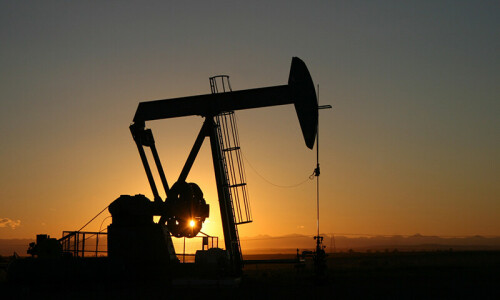
Israel and Iran are on the brink of an all-out war, with the US militarily ready “to defend” Israel. International oil prices have already risen after Tehran’s unprecedented Oct 1 attack on Tel Aviv in response to Israeli aggression. The situation in the Middle East is alarming.
Pakistan’s leadership understands what serious implications an Iran-Israel war may have for their debt-trapped country. Any misstep from the hybrid regime or inexcusable delays in the execution of national solidarity moves could not only reverse the nascent economic recovery but also compound political problems.
In the outgoing fiscal year, Pakistan’s economy grew just 2.5 per cent against the target of 3.5pc — too small to create more jobs or space for development spending for sustainable growth. The last year was also weak because it was driven chiefly by the 6.36pc expansion in agriculture and a modest 2.15pc rise in the services sector, whereas overall industrial output shrank by 1.15pc.
In the first quarter of this fiscal year, the external sector witnessed a relative calm, with exports and remittances increasing and with the release of the first $1bn tranche of the International Monetary Fund’s (IMF) $7bn loan by the end of the quarter. During July-September 2024, merchandise exports grew 14.1pc year-on-year to $7.87bn and remittances in July-August 2024 shot up 44pc year-on-year to $5.94bn, according to the Pakistan Bureau of Statistics and the State Bank of Pakistan (SBP).
Conflict in the Middle East and national instability could disrupt momentum and compound political problems
SBP Governor Jameel Ahmed informed last week that with the inflow of the IMF’s money, the central bank’s foreign exchange reserves rose to $10.7bn as of Sept 27. But, even at this level, the reserves are enough to cover only two months of the country’s merchandise imports — against the internationally acceptable minimum import coverage of three months.
Pause here for a moment and imagine what may happen to the reserves if global oil prices continue to climb further up or surge, in case Iran and Israel engage in a full-scale war.
Much depends on the multi-billion dollar foreign investment deals signed earlier with Saudi Arabia, United Arab Emirates and Qatar for feasible projects in agriculture, mining, petroleum and energy sectors.
However, broader peace in the Middle East now looks elusive. If this assessment proves true, the pace of promised inflows of foreign funds from Arab countries may be affected.
Headline consumer inflation has touched a 44-month low of 6.9pc, providing some relief to people and businesses burdened with additional taxes and high energy prices. The government says falling commodity prices, stable rupees, and high-base effects have brought down annualised consumer inflation from 31.4 pc in September last year to just 6.9 pc in September this year. However, they do not talk about demand contraction, another major contributor to lower inflation.
The IMF’s previous short-term loan’s conditionalities, plus its additional conditions that Pakistan was made to implement ahead of the release of the first tranche of the new loan, were so harsh that both households and firms had no option but to become minimalists of the highest order. Lower demand for both household and industrial items was bound to decelerate inflation, and it has happened now.
What is important to see in the future is whether implementation of the new IMF conditions attached to its 37-month $7bn loan spurs economic growth, restores lost jobs and creates more. According to the IMF’s estimates, about 6.9 million Pakistanis will be unemployed by the end of 2023. This number must have risen by now as the country has seen no big move made for the restoration of old jobs or the creation of new ones.
In fact, the highhandedness with which the hybrid regime recently implemented an “updated web management system” rendered thousands of young freelancers jobless and minimised earnings of many more; in most cases temporarily, but in some cases for good.
Pakistan’s economy is undoubtedly showing signs of recovery. But its momentum can be sustained only if more serious efforts are made to secure internal political stability, rampant abuse of fundamental constitutional rights is stopped, and smaller provinces are treated justly.
Published in Dawn, The Business and Finance Weekly, October 7th, 2024