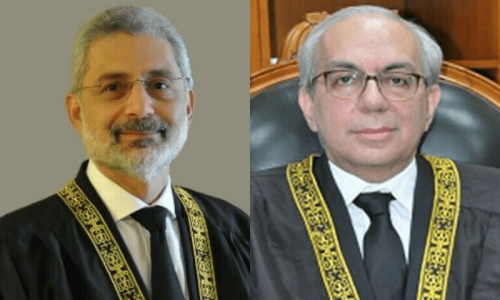
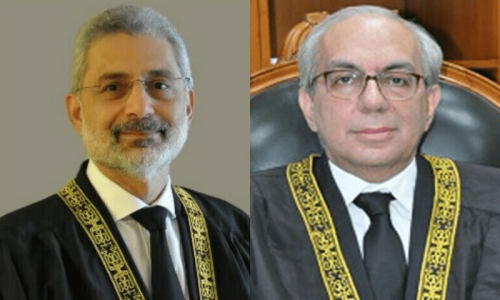
THE ongoing spat within the Supreme Court has raised serious concerns about the integrity of the country’s highest judicial forum at a time of unprecedented crises.
Instead of articulating their differences through formal judgments, which judges are expected to do, senior justices have taken to airing their grievances in public. Their sparring has eroded the court’s power and left it vulnerable. The chief justice has been made the target of much criticism in recent days — owing, perhaps, to his seemingly contradictory positions before and after taking office.
However, to blame any individual would be unfair. Other senior judges equally share the responsibility for the ongoing turmoil. For example, the recent note addressed by the senior puisne judge to the chief justice questioning the exclusion of a third judge from the Supreme Court’s apex committee should perhaps not have ended up in the public domain. Nor should, for that matter, the response to it.
Indeed, it would have been much better for the issue to have been addressed internally through consultation and debate. Alas, the bitter exchanges have added fuel to the fire. The episode has only solidified the perception that the judges have chosen to take sides against each other and do not wish to work towards a resolution, thus further damaging the judiciary’s prestige and weakening public confidence in its ability to function impartially. As other state institutions grow more assertive, continued failure to present a united front will increasingly endanger the apex court’s authority.
It is also painful to note how the current schism is turning into a rather disturbing reflection of a past crisis. One cannot help but recall former chief justice Sajjad Ali Shah’s troubled tenure, which culminated in his downfall because of persistent discord within his court. While that comparison seems crude at this point — and one sincerely hopes that the situation never comes to pass — the present judiciary should guard against the path leading to it.
The judges must recognise that their squabbling has proven to be a godsend for those who have long wished to weaken the court and capture the state. The government’s refusal to implement the court’s decision in the reserved seats case is example enough of how other institutions will take advantage of the situation.
The responsibility for restoring the court’s writ lies with the senior-most judges of the Supreme Court. They must prioritise their institution over their personal differences and make a sincere, concerted effort to resolve their problems. There is time still for them to come together and settle all disputes amicably. The judiciary has survived many challenges in the past, and it can do so again. For that, its leaders must let bygones be bygones and act with wisdom and restraint.
Published in Dawn, October 3rd, 2024