0
0
THE government is desperate to increase its abysmally low tax collection to meet the stringent revenue conditions of the new $7bn funding programme approved by the IMF recently.
In order to meet the tax target, the FBR has worked out a new compliance and enforcement plan, which primarily relies on punitive actions against tax evaders and cheaters. The authorities hope that it will compel existing taxpayers to stop underreporting their taxable incomes and incentivise non-filers to become taxpayers in order to avoid restrictions on their use of cash for travel, and the purchase of property, cars and financial instruments.
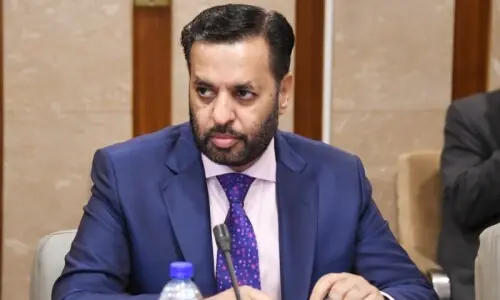
The political and financial leadership appears to be enthusiastic about the new strategy, owing to its promise of achieving the desired results in the near term by narrowing the tax gap of Rs7.1tr — representing tax evasion and corruption — without the need to pursue tedious reforms. On the basis of this plan, Finance Minister Muhammad Aurangzeb announced on Sunday the government’s “war on cash” as part of the strategy to tap into over the Rs9.3tr in circulation and maximise revenue potential.
According to him, non-filers and under-filers are evading taxes amounting to around Rs1.3tr at the individual level. When it comes to circumventing real tax reforms to broaden the tax base, the new ‘transformation plan’ does not deviate from previous strategies.
There is a broad consensus among tax experts and economists that Pakistan’s tax system is complicated, unfair, inequitable, corrupt, and inefficient — enough to discourage people from filing. The experience of other countries has established that broad-based, low-rate taxes provide the least incentives for people to evade, avoid and underreport taxable incomes. India, for example, has significantly increased its direct income tax collection as a ratio of the economy by streamlining its tax regime, offering reduced rates, and curbing exemptions.
In addition to increased monitoring and compliance, and the expansion of the formalisation of the economy through technology, initiatives such as incentivised lower tax rates for corporations and individuals who forgo exemptions have been implemented, aligning with the agenda to simplify taxation. It is no wonder that India’s direct tax-to-GDP ratio reached a record high of 6.5pc in the fiscal year 2023-24. This increase is attributed to growth in income tax collections rather than corporate tax collections.
The Indian experience shows that tax compliance can be ensured only through a combination of incentives and the fear of punishment. However, the strategy developed by the FBR to boost compliance rates appears to rely solely on enforcement through punitive actions against tax evaders and cheaters, without actually reforming the complicated tax regime.
Hence, most tax experts — unlike the minister — have little confidence in the plan as a viable strategy that will help Pakistan overcome its tax woes.
Published in Dawn, October 1st, 2024