0
0

PESHAWAR: In the heart of a small village, a family dispute unravels over property inheritance, setting siblings against each other in a quarrel that transcends legal and traditional norms.
Hajra and Yasmin (not their real names) confronted the decision to preempt their only brother’s attempt to seize their rightful share in inherited property through deceitful means, by seeking judicial recourse. Their destination was the office of the ombudsperson, Khyber Pakhtunkhwa Protection against Harassment of Women at Workplace.
The office serves as a quasi-judicial forum to guard against harassment of women at workplace. But in 2019, the provincial government took the remarkable decision of granting the ombudsperson additional powers to decide inheritance and property cases of women through the Khyber Pakhtunkhwa Enforcement of Women’s Property Rights Act, 2019.
Since its inception, the office has entertained, addressed and decided hundreds of complaints as more and more women head to it to seek their rightful share in property against unyielding and reluctant male siblings. Peshawar High Court upheld the decisions by the ombudsperson, thus granting further validity to the decisions it makes.
In 2021, the ombudsperson received 281 cases/complaints, with 74 cases still under process. In an encouraging sign, indicative of the women’s growing confidence in the process in 2022, the number of complaints escalated to 619, with 302 still under process. In the first half of 2024, 389 cases have so far been received by the ombudsperson office.
However, amid threats and intimidation from their brother’s family, the sisters had to turn to the traditional jirga system to resolve their issue.
Preference for the jirga system over legal recourse reflects the enduring influence of traditional dispute resolution mechanisms in a world caught between tradition and modernity, showcasing the delicate balance in their quest for justice and resolution.
It is the beauty of this special law that it applies to all without any discrimination of religion and caste.
Satwanti was 15 years old when she was wedded to an old widower with two sons from a previous marriage. She is now 70 and is fighting for her inheritance share in a little over-two marla house in Peshawar cantonment against her stepsons. Not surprisingly, her Hindus Panchayat is siding with her stepsons.
An official from the ombudsperson’s office informed that it handled approximately five to 10 cases daily, emphasising the confidence of women to secure their rights and become financially empowered.
The duration for resolving cases typically spans from six months to a year, depending on the complexity of each case, the official added.
Times are changing and in a sign of growing awareness amongst women about their rights, even women from the hitherto conservative tribal regions are coming in droves to seek their share in property.
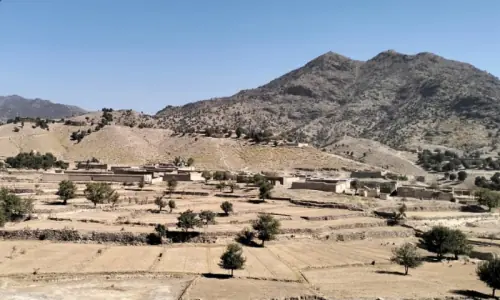
In Khyber tribal region alone, close to a hundred women have filed application for ownership in inherited land. Women from as far as the scenic Kalam in Malakand division have had to travel for hours to lodge their applications.
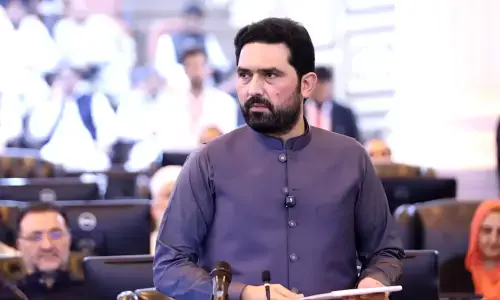
“One of the biggest problems, I face, is the reluctance by the district authorities to support this office,” Rakhshanda Naz, the ombudsperson, told this scribe.
“They make every excuse, sometimes funny ones, to deny me the opportunity to hold an open court,” she complained.
The office, she said, also provided valuable support to individuals uncertain about commencing a case. “In situation where individuals encounter threats from their opponents, the ombudsperson ensures their safety by liaising with the local police in their area,” she added.
Rakhshanda complains of lack of support from the provincial government. She has to work with a staff of thirteen people and sometimes works as a steno to draft her own letters.
In the absence of no regional offices, her office has to manage the entire load of complaints from across the province.
“I have campaigned for women’s rights all my life,” she maintains, adding that she believes it is her time to secure the due rights of womenfolk.
Published in Dawn, September 30th, 2024