As wars rage, UN’s critics say global body is failing its mission



As wars rage worldwide, with civilian casualties a daily occurrence, critics of the United Nations say the body is failing at its most basic job, while experts warn the organisation is being scapegoated for things that are beyond its control.
Maintaining peace and international security is one of the UN’s central missions, but its record has been badly tarnished as bloodshed intensifies in conflicts across the world, including in Gaza, Ukraine and Sudan.
The UN’s detractors point to those brutal conflicts, among others, as evidence that the global organisation — hosting its centrepiece gathering of world leaders in New York this week — has failed in its mission.
The UN’s chief, however, has a different view.
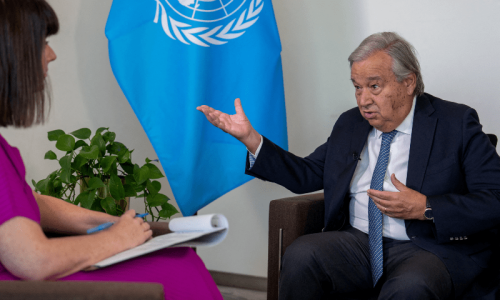
“It’s obvious that we are not having peace and security in the world, and it’s obvious that it’s not because of the UN as an institution that doesn’t happen,” UN Secretary General Antonio Guterres told AFP.
“It’s because of member states.”
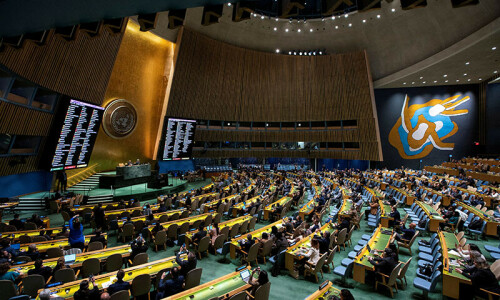
The Security Council, the UN body charged with securing and enforcing peace, is largely paralysed on the issues of Gaza and Ukraine because of the vetoes wielded by Washington and Moscow.
The deep divisions between the council’s permanent members — Britain, France, China, Russia and the United States — mean that its “legitimacy and relevance” are eroded, complained Slovenia’s UN ambassador Samuel Zbogar, the rotating president of the body.
He also condemned the “poisonous mood” in the council, blaming Washington and Moscow for it.
The fractious situation at the UN Security Council is, however, nothing new. “The UN has never been able to stop conflicts involving the major powers,” said Richard Gowan of the International Crisis Group, accusing countries with dominant militaries of hiding behind the UN.
“It’s ultimately better to have the US and Russia arguing over Syria in the Security Council rather than fighting a hot war in Syria.”
‘A lot of hate’
Oona Hathaway, a professor of international law at Yale University, defended the Security Council, saying many of the institution’s successes were inherently invisible.
“What you don’t see is the wars that don’t happen,” she said, calling for the rest of the UN’s 193 members to do their bit for peace through the General Assembly.
Though that body’s resolutions are non-binding, Hathaway said that the assembly is more powerful than it perceives itself and that it could, for example, create a tribunal to hold Russia accountable for its Ukraine war.
Academics have stressed the importance of the UN’s peacekeeping operations, with 70,000 “blue helmets” deployed worldwide for the protection of civilians.
However, the lofty aims of the missions have not spared them from bitter opposition. In Mali, for instance, the peacekeeping force was forced out by the ruling junta in 2023, which said the force had failed.
“There’s a lot of hate of the UN but this is actually the best multilateral system that we have,” said Gissou Nia of the US-based Atlantic Council think tank.
No other organisation could be built today in the UN’s image, given a global geopolitical situation that is riven with deep divides, she said.
Jean-Marie Guehenno, the former head of UN peacekeeping, insisted that the institution was irreplaceable and that while “the UN is in a rough patch, it would not be in our interest to shut up shop”.
“So [countries] whine, they say the UN is useless — but at the same time, they acknowledge it’s still a useful forum and a bellwether. A bellwether that has been trampled, insulted and left in bad shape — but with the hope of a better future,” he said.
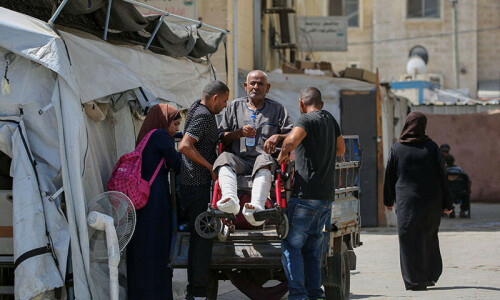
Guterres insists the UN’s humanitarian role is “more important than ever” and that the organisation’s agencies have “been rescuing people in dramatic circumstances”.
While some observers would like to see the UN seize the initiative diplomatically more often, Guterres acknowledges that “the secretary general of the United Nations has very limited power.”
“No power and no money,” he concluded.