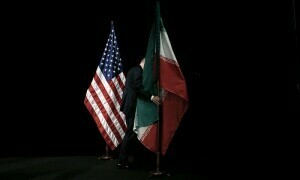
TEHRAN: Iran’s new government will seek to “manage tensions” with its arch-enemy the United States to help reduce pressure and neutralise crippling sanctions, Foreign Minister Abbas Araghchi said.
“What we have to do is manage the tensions and hostilities” between Tehran and Washington, he said in an interview late Friday on state television.
Iran and the United States have had no diplomatic relations since 1980, the year after the Islamic revolution that toppled its Western-backed Shah Mohammed Reza.
A landmark 2015 deal between Tehran and world powers granted Iran sanctions relief in return for curbs on its nuclear programme.
But the deal quickly collapsed and tensions reignited following the United States’ unilateral withdrawal from the accord in 2018.
“In foreign policy, we have a duty to reduce as much as possible the cost of this hostility and reduce its pressure on the nation,” said Araghchi, who was one of the key negotiators of the 2015 agreement.
He added that Iran’s foreign policy will prioritise “neighbouring countries” as well as African countries, along with China and Russia, among others.
Araghchi criticised European countries for having “adopted hostile policies” towards Iran in recent years.
He said they would only “become a priority” when they “abandon their wrong and hostile policies”.
During the interview, the foreign minister expressed Tehran’s unwavering support “under any circumstances” for the so-called axis of resistance, a network of Iran-aligned armed groups across the Middle East opposed to Israel.
A career diplomat, Araghchi became Iran’s new foreign minister after parliament voted on Wednesday in favour of the new cabinet presented by reformist President Masoud Pezeshkian.
Pezeshkian had advocated for a more open Iran but has been criticised by some among Iran’s reformist camp for not including enough women in his new cabinet.
On Tuesday, he named Shina Ansari as his vice president for the environment, the third woman to hold this post since the 1979 Islamic revolution.
Published in Dawn, August 25th, 2024