WHAT started off as a desperate attempt to choke public criticism of state institutions is now threatening to shake the very foundations of Pakistan’s budding digital economy. This week, internet users experienced a higher-than-usual level of difficulty accessing internet services.
As industry leaders sounded the alarm, warning that IT businesses were considering relocating, the government finally acknowledged that it has been updating its “web management system”, its euphemism for a firewall meant to monitor Pakistanis’ online activities. The admission came from the young IT and telecom minister, Shaza Fatima Khawaja. Thus far, her ministry had either feigned ignorance or not been truthful about the internet connectivity problems across the country, even attributing them to ‘technical faults’ on the end of various service providers.
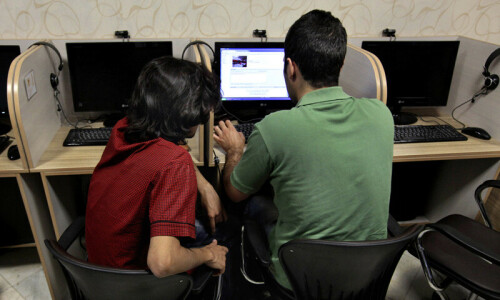
While Ms Khawaja was pooh-poohing internet users’ concerns about the effects of the firewall before a Senate committee, one of the world’s largest platforms for freelancers had already begun labelling the accounts of Pakistani gig workers as ‘unavailable’. Fiverr, which is popular with Pakistani workers offering their services in the global digital economy, said that it felt compelled to warn its clients that Pakistani freelancers’ ability to complete projects on time may be affected by the internet disruptions they are facing.
This is nothing short of a major crisis. Pakistan is one of the biggest suppliers of labour to the global online workforce; the third largest, in fact, according to the University of Oxford’s Online Labour Index. In a country where decent employment is difficult to come by, many young men and women have been selling their skills to foreign clients through the internet, netting a solid income for themselves and much-needed foreign exchange for the country.
Though Pakistani gig workers generally enjoy a positive reputation, their reliability is now in question. Both rights activists and experts kept pointing out that implementing a firewall and restricting internet services could have unforeseen consequences.
Armed with Maslow’s hammer, the authorities refused to listen. Now, they may have imperilled the future of thousands, if not hundreds of thousands, of young workers by broadcasting to the world that Pakistanis in the gig economy cannot be relied upon because their government keeps interrupting their access to the internet on a whim. The long-term consequences of this policy could be devastating.
If Pakistan continues to be seen as an unreliable partner in the global digital economy, it risks losing a significant source of foreign exchange and stifling the growth of its IT sector. The state should not allow itself to be so blinded by its desperation that it ends up setting the whole forest on fire just to smoke out a few mischief-makers. Such short-sighted policies may only push even more youth towards agitation against the state.
Published in Dawn, August 17th, 2024