Bangladesh students call for nationwide civil disobedience


Student leaders rallied Bangladeshis on Saturday for a nationwide civil disobedience campaign as Prime Minister Sheikh Hasina’s government weathered a worsening backlash over a deadly police crackdown on protesters.
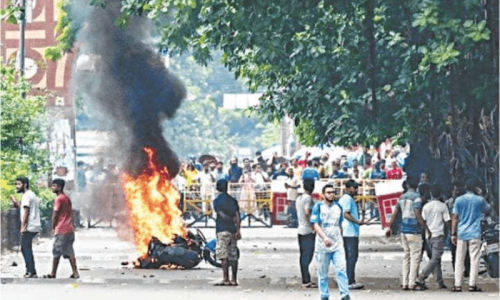
Rallies against civil service job quotas sparked days of mayhem last month that killed more than 200 people in some of the worst unrest of Hasina’s 15-year tenure.
Troop deployments briefly restored order but crowds hit the streets in huge numbers after Friday prayers in the Muslim-majority nation, heeding a call by student leaders to press the government for more concessions.
Students Against Discrimination, the group responsible for organising the initial protests, urged their compatriots to launch an all-out non-cooperation movement from Sunday.
“This includes non-payment of taxes and utility bills, strikes by government workers and a halt to overseas remittance payments through banks,” the group’s Asif Mahmud told AFP.
Mahmud’s fellow student leaders also said another round of nationwide rallies would be staged on Saturday. “Please don’t stay at home. Join your nearest protest march,” Mahmud wrote on Facebook.
Students are demanding a public apology from Hasina for last month’s violence and the dismissal of several of her ministers.
They have also insisted that the government reopens schools and universities around the country, all of which were shuttered at the height of the unrest. Crowds on the street have gone further, chanting demands for Hasina to leave office altogether.

“She must go because we don’t need this authoritarian government,” Nijhum Yasmin, 20, told AFP from one of many protests staged around the capital Dhaka on Saturday.
“Did we liberate the country to see our brothers and sisters shot dead by this regime?”
“Now the tables have turned,” Illinois State University politics professor Ali Riaz told AFP.
“The regime’s foundation has been shaken, the aura of invincibility has disappeared,” he added. “The question is whether Hasina is ready to look for an exit or fight to the last.”
The premier had on Saturday offered “unconditional dialogue” with the students to address their demands, her press secretary Nayeemul Islam Khan told AFP.
“She is ready to sit with them. She does not want conflict any more,” he added. Mahmud told AFP that students had rejected the overture.
32 children killed
Hasina, 76, has ruled Bangladesh since 2009 and won her fourth consecutive election in January after a vote without genuine opposition.
Her government is accused by rights groups of misusing state institutions to entrench its hold on power and stamp out dissent, including the extrajudicial killing of opposition activists.
Demonstrations began in early July over the reintroduction of a quota scheme — since scaled back by Bangladesh’s top court — that reserved more than half of all government jobs for certain groups.
With around 18 million young Bangladeshis out of work, according to government figures, the move upset graduates facing an acute employment crisis.
The protests had remained largely peaceful until attacks on demonstrators by police and pro-government student groups.
Hasina’s government eventually imposed a nationwide curfew, deployed troops and shut down the nation’s mobile internet network for 11 days to restore order.
Foreign governments condemned the clampdown, with European Union foreign policy chief Josep Borrell this week calling for an international probe into the “excessive and lethal force against protesters”.
Home Minister Asaduzzaman Khan told reporters last weekend that security forces had operated with restraint but were “forced to open fire” to defend government buildings.
At least 32 children were among those killed last month, the UN said on Friday.