PAKISTAN is seeing some seismic disruptions in its social order. Recent developments in Balochistan, KP and Islamabad depict a society in flux, one which is facing severe, intense internal pressures due to tensions between the state and its people. All three areas have recently witnessed significant turmoil, and, in each case, those making decisions at the top have appeared out of their depth when dealing with the troubles. As a result, the country’s challenges, instead of being contained, now seem to be expanding.
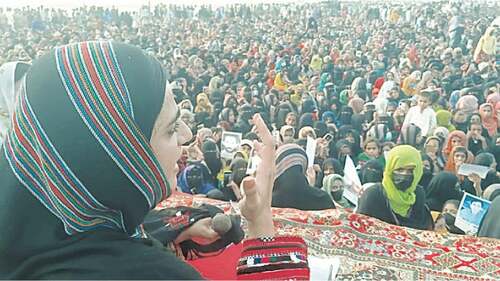
Consider the ongoing unrest in Balochistan. When Mahrang Baloch had marched to Islamabad last winter to peacefully demand the whereabouts of missing persons, she was met with scorn and treated in the crudest way possible. The Baloch people, from all walks of life, have now rallied around her, and the state is finding it difficult to cope with the outpouring of sympathy for her cause. Out of desperation, it is responding with even more violence, thereby stoking anger in the province to precarious levels.
Then consider Bannu, which recently saw an uprising due to the federal government’s failure to separate national security from politics. The locals and the armed forces, who both want the land rid of militancy, found themselves facing off instead due to the erosion of trust between them. Violence and unnecessary bloodshed followed, which have added to the pre-existing tensions between KP and the centre. Much damage had already been done by the time it was clarified that the people of Bannu need not fear any large-scale military operation. One wonders if matters would have unfolded differently if the federal government had heeded multiple calls to take the provincial political leadership into confidence.
Then there is Islamabad, where the state has taken several contradictory positions in recent days. Days before the JI protest, an important artery in the federal capital was recently seized by the TLP, and its sudden decision to protest the war in Palestine was entertained till matters were settled with talks. Apparently not satisfied with the nuisance it had caused, the party then issued a death warrant for the chief justice. Though condemnations have been issued and a case registered, it is evident that the state’s ‘soft touch’ in dealing with the TLP has emboldened it enough that it feels it can cross unthinkable lines.
On the other hand, the campaign to suppress the PTI continues apace, even though the party has repeatedly asserted that it only wants to protest peacefully. This endorsement of double standards for ‘favoured’ and ‘disfavoured’ social groups is antagonistic and may provoke more people to take extreme positions. From Gwadar to Islamabad, there is a need to urgently rethink the policies that have been chosen. Instead of solving problems, they are catalysing societal breakdown.
Published in Dawn, July 30th, 2024