Surveillance system launched for facial, number plate recognition at Sindh toll plazas


 0
0


KARACHI: Chief Minister Syed Murad Ali Shah on Thursday inaugurated the Sindh Smart Surveillance System (S4) project aimed at providing a comprehensive and integrated security solution for all major entry and exit points connecting all major cities in the province.
Officials have said that the system would enable effective monitoring of entry and exit points and ensure security through the integration of advanced technologies such as facial and number plate recognition at 40 toll plazas, including 18 in Karachi.
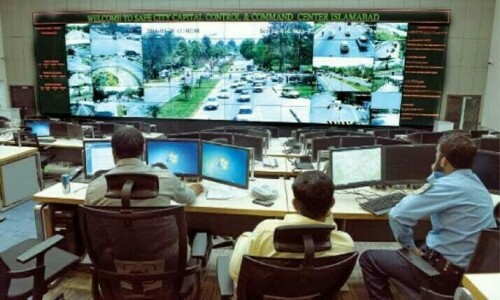
They said that the project also aimed at enhancing security responses and seamlessly integrating with the existing command and control centre at the Central Police Office (CPO).
The inauguration ceremony of the first of the Sindh Safe Cities-related project was held at the CPO.
CM Murad says project will help arrest over 80,000 absconding criminals, reduce vehicle theft and snatching
Speaking on the occasion, CM Shah hoped that the S4 project would facilitate the arrest of over 80,000 absconding criminals and reduce the crime of vehicle theft and snatching as the system was designed to have the capabilities for crime prevention and deterrence.
He stated that the system would assist the police in identifying suspects and criminals, locating stolen vehicles, and conducting surveillance and investigations.
“This will enhance public safety, and improve traffic management, and overall efficiency. Additionally, it will help the police in analysing crime patterns,” he said.
Mr Shah said he approved Rs1.567 billion in 2022-23 to procure the ANPR Camera System by direct contract with the National Radio Telecommunications Corporation (NRTC).
He said his government was duty-bound to establish a crime-free society in the province.
In the early 1980s, people used to travel in police squads but when the PPP government came into power it improved overall law & order in the province and made the highways safe and secure, he said.
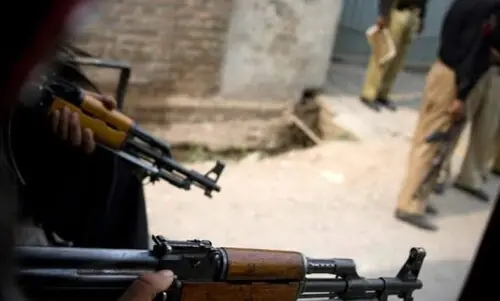
“The Sindh police have started a well-coordinated targeted operation against dacoit gangs in the riverine area,” he said and added that the dacoits who had killed five policemen in Ghotki district had been killed in an “encounter”.
Criticising what he described as a “social media brigade” that spread fake news to misguide people, he said the social fabric was being torn apart due to that.
Later, the CM visited the command & control centre where he was given a detailed briefing by Inspector General of Police Ghulam Nabi Memon.
The CM was informed about the implementation of automatic number plate recognition and face recognition-based smart surveillance on all listed toll plazas in Sindh with central monitoring at CPO Karachi.
He was told about the main components that included capturing and recognition of authorised number plates through nine-megapixel night vision cameras installed close to toll plazas; capture and recognition of drivers’ and co-drivers’ faces through eight-megapixel night vision cameras installed at all listed toll payment booths; installation of a complete solar-powered solution at each toll plaza with eight to 10 hours of battery back-up; deployment of the latest AI and analytical tools for actionable intelligence, etc.
Provincial ministers, Saeed Ghani and Zulfiqar Shah, Principal Secretary to CM Agha Wasif, provincial secretaries, senior officers of Pakistan Rangers and NRTC, and members of civil society also attended the ceremony.
Health insurance scheme for cops
The CM announced that 127,482 police employees and jawans were now covered by a comprehensive health insurance scheme, with a total outlay of Rs4.9 billion. Under the scheme, each family will have a basic hospitalisation limit of Rs1 million.
The insurance plan covers pre-hospitalisation charges (30 days before admission), post-hospitalisation charges (30 days after discharge), normal and C-Section delivery charges, and includes spouses, sons/daughters, and parents as dependents.
The scheme, titled Behbood-i-Jawan Health Insurance Plan, offers equal coverage to employees of all grades and includes all treatments, medications, and investigations during hospitalisation, as well as coverage for emergency room treatment.
Special investigations are covered across Pakistan without any restriction on the number of family members.
IGP Memon stated that each employee will receive a health insurance card.
Earlier, Home Minister Ziaul Hassan Lanjar thanked the chief minister for providing funds for the installation of the S4 system.
Published in Dawn, June 21st, 2024