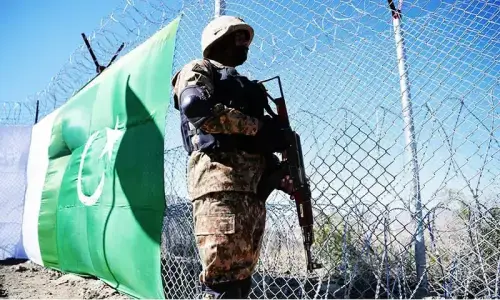
IN the wake of the recent wave of terrorist attacks targeting Pakistan, with most of the atrocities linked to violent groups based in Afghanistan, a reaction appeared imminent. Last week, Defence Minister Khawaja Asif warned that Pakistan would target Afghanistan if the terrorist violence continued. The latest strikes reported on Sunday bear out the minister’s comments.
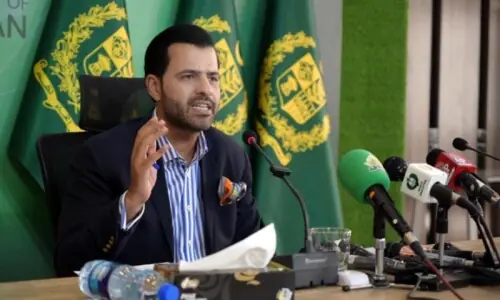
The state says several TTP and IS-K camps have been hit in the neighbouring country, specifically in the Nangarhar and Paktika provinces, with security sources observing that at least 80 terrorists have been killed. Commenting on the military action on Monday, the parliamentary secretary for information has said that the country’s security is non-negotiable.
For its part, the Taliban regime says it will respond in an “appropriate” manner. Afghan officials have also claimed that civilians were hit, although Pakistani authorities term these allegations “false and malicious”.
In this month alone, there have been several major terrorist attacks in Pakistan, including the bombing of an imambargah in Islamabad, which was traced to IS-K. More recent incidents include attacks in Bajaur and Bannu, which martyred several security men. These attacks were believed to be the handiwork of the banned TTP. Therefore, it appears that the state had little choice but to hit terrorist targets across the border.
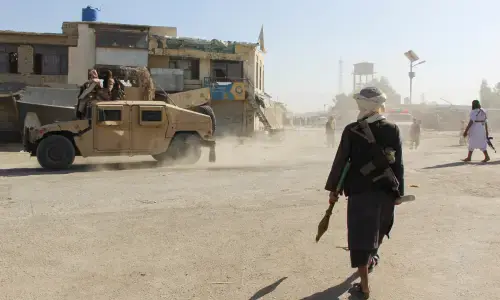
As the information ministry noted, the regime in Kabul has failed to take any substantive action against violent actors on Afghan territory. The UN has pointed out in several reports that IS-K maintains a presence along Pakistan’s border with Afghanistan. Though the Afghan Taliban oppose the IS-K, they have done little to dislodge the terrorist group from its perches along the border. In contrast, the TTP are ideological comrades of the Kabul regime, and it should be within the Afghan Taliban’s power to control their allies and prevent them from staging cross-border attacks.
Dialogue is always preferable to armed hostilities. However, when the other side does not make any attempt whatsoever to rein in terrorism emanating from its soil, then there remains no option but to target those who spill blood again and again. In the long term, the escalation of hostilities is in the interest of neither state, and all outstanding issues — particularly that of terrorism emanating from Afghanistan — need to be resolved diplomatically.
No state believes the Taliban when they say they do not host terrorist groups; the presence of lethal terrorists on Afghan soil is internationally well-documented. Therefore, the onus is on Kabul to put enough pressure on the TTP and other hostile actors to end attacks on Afghanistan’s neighbours. Achieving this would lead to better ties between Afghanistan and these countries. Left unaddressed, the issue will create a perilous regional situation.
Published in Dawn, February 24th, 2026