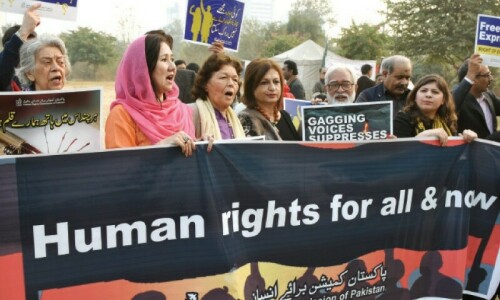
PAKISTAN faced a tumultuous year in 2023 marked by severe economic distress and a sharp erosion of civil liberties. As documented in the HRCP’s annual report, the year was nothing short of a human rights crisis on multiple fronts.
Economic hardship was pervasive, with back-breaking inflation — nearly 40pc — and low growth hitting the common citizen the hardest. Protests were widespread, ranging from government employees striking against delayed salaries and pension issues to political demonstrations demanding timely elections. The state responded with indifference and sometimes outright violence, underlining its disregard for the people’s constitutional rights.
The political arena was no less strained: the year saw unprecedented violence following the arrest of former prime minister Imran Khan; subsequent PTI-led riots were met with harsh government crackdowns. This included mass arrests and the controversial use of military courts for civilian trials. Political dissent was stifled and freedom of speech curtailed with internet shutdowns and media gags on reporting of certain political leaders.
Sadly, the government’s management of the turmoil involved significant overreach, impacting judicial independence and skewing the electoral landscape. The swift passage of laws granting sweeping powers to intelligence agencies and restricting media freedoms points to the government’s alarming propensity to consolidate power at the cost of transparency and accountability.
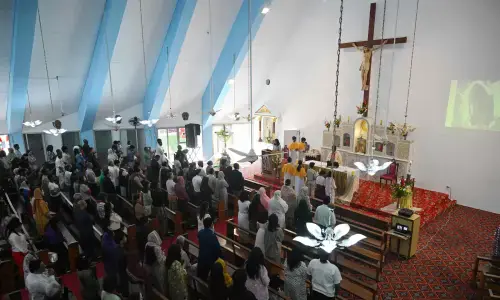
Human rights violations were not limited to political suppression. The report highlights severe abuses such as enforced disappearances, alleged extrajudicial killings and custodial torture by state agencies. The societal impact of these policies and actions has been devastating. Moreover, marginalised communities, including women, children, religious minorities, and transgender persons, faced increased violence and discrimination.
Notable too was the harsh crackdown on peaceful assemblies like the Baloch Yakjehti Council’s protests. On the international front, despite engaging with global human rights mechanisms, Pakistan’s selective adherence to recommendations concerning enforced disappearances and the use of the death penalty reflected a reluctance to fully align with international human rights standards.
Rulers would do well to remember that adhering to those standards will help maintain Pakistan’s desperately needed GSP-Plus status and be a more inviting place for foreign investment.
As the year proceeds, it is imperative for the state to reconsider its approach to human rights. The government must ensure the independence of the judiciary, respect for democratic processes, and protection for all citizens against the abuse of power. Laws that infringe on freedom of expression and assembly should be reviewed and reformed.
Additionally, there should be a concerted effort to address the economic inequalities that underpin much of the social unrest. For a stable and prosperous Pakistan, human rights must be more than an ideal; they must be an integral part of governance and everyday life.
Published in Dawn, May 12th, 2024