Iran will change its nuclear doctrine if Israel threatens its existence, an adviser to Iran’s supreme leader said, the latest comment by an Iranian official which raises questions about what Tehran says is its peaceful nuclear programme.
Tehran has always said it had no plans to obtain nuclear weapons. Western governments suspect it wants nuclear technology to build a bomb; its nuclear programme has been at the centre of a long-running dispute that has led to sanctions.
In April, amidst a tense standoff with Israel — which is widely believed to have nuclear weapons — a senior Iranian Revolutionary Guards commander also said Israeli threats could prompt Iran to change its nuclear doctrine.
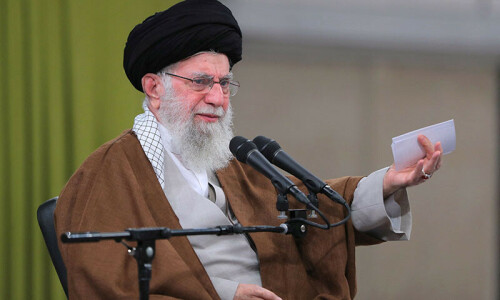
“We have no decision to build a nuclear bomb but should Iran’s existence be threatened, there will be no choice but to change our military doctrine,” Kamal Kharrazi, adviser to Supreme Leader Ayatollah Ali Khamenei, was reported as saying by Iran’s Student News Network on Thursday.
In 2022, the same adviser said Iran was technically capable of making a nuclear bomb but had not yet decided whether to build one.
Khamenei, who has the final say in Tehran’s nuclear programme, banned the development of nuclear weapons in a religious edict in the early 2000s. He reiterated that in 2019, saying that building and stockpiling nuclear bombs was “wrong and using it is haram”, or religiously forbidden.
But Iran’s then-intelligence minister said in 2021 that Western pressure could push Tehran towards nuclear weapons.
In his latest comments, Kharrazi said: “In the case of an attack on our nuclear facilities by the Zionist regime (Israel), our deterrence will change.”
Iran and Israel have long been arch-enemies, but what was for decades a shadow war erupted into an open confrontation in April, when Tehran launched about 300 missiles and drones against Israel in retaliation for a suspected Israeli strike on its embassy compound in Damascus.
In response, Israel launched an attack on Iranian territory.
Iran is enriching uranium to up to 60 per cent purity, whereas weapons-grade uranium is enriched to about 90pc. If the current nuclear material on hand were enriched further, it would suffice for two nuclear weapons, according to an official yardstick by the International Atomic Energy Agency.