THERE have been numerous incidents in Pakistan’s history where innocent people have been singled out and murdered on the basis of their ethnic or confessional identity.
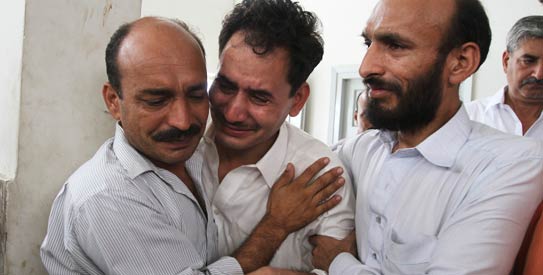
The brutal massacre in Noshki, Balochistan, late Friday night is only the latest example of this grim trend. According to reports, armed militants had set up a blockade on the Quetta-Taftan highway, and after stopping a bus, forced nine passengers off the vehicle.
The victims’ papers were checked and later, their bodies found under a bridge. All the victims hailed from different towns in Punjab. In a similarly grisly episode last October, six construction workers, also from Punjab, were massacred in Turbat while they were asleep.
Meanwhile, aside from suspected Baloch separatists, sectarian terrorists have used similar methods to hunt down their victims. At least 29 Shia passengers were mowed down by Lashkar-i-Jhangvi terrorists after they were pulled off a bus in Mastung in 2011, while 20 passengers, also Shia, met a similar fate in the massacre on Babusar Top in 2012.
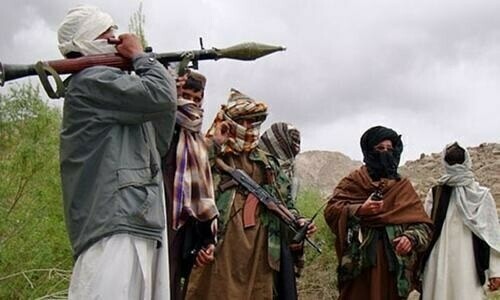
No cause can justify the slaying of innocent people in such a brutal manner. The BLA has claimed responsibility for the Noshki atrocity. Previously, too, Baloch militants have been suspected of carrying out attacks on ‘outsiders’ — mostly poor workers who have left their homes to provide for their families.
This incident will hardly win sympathy for the separatists’ cause, and, will, in fact, lead to revulsion at the brutality involved. Though terrorist acts carried out by militant groups are unacceptable, Balochistan’s grievances are genuine.
But the struggle to secure the province’s legitimate rights must be peaceful and within the democratic framework. Murdering innocent non-Baloch workers and ‘settlers’ does a huge disservice to the struggle to secure constitutional rights for all of Balochistan’s people.
Looking at the bigger picture, the Noshki killings highlight the varied threat militancy poses to the country’s security. While religiously inspired groups are spearheading violent campaigns in KP and the north, Baloch separatists have created a state of insecurity in Balochistan. Left unattended, these separate but equally dangerous militant campaigns pose an immense national security threat.
In Balochistan, the state has failed to control militancy despite maintaining an overwhelming security blanket across the province. It must be asked why Baloch separatists continue to target civilians as well as security men despite such large deployment.
The key to addressing militancy in Balochistan is two-pronged. Short-term measures must focus on neutralising armed actors who threaten the state and its citizens, including snapping any links with foreign backers that may be providing financial and logistical support to separatist outfits.
In the longer term, the poverty and deprivation that blight much of Balochistan must be addressed judiciously to stem the flow of recruits to the separatist cause.
Published in Dawn, April 14th, 2024