AS the dust settles on the post-election process, there is increasing public discussion about the concept of caretaker governments, and their utility in Pakistan’s political milieu.
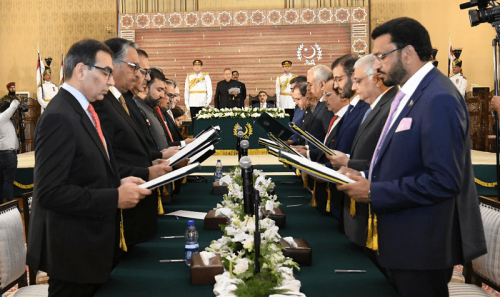
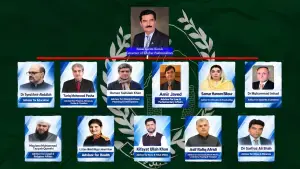
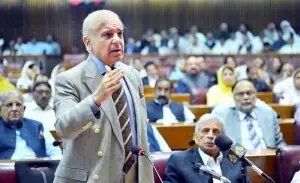
Much of this talk has been sparked by the problematic performance of the interim set-up that oversaw last month’s general elections. In a recent Senate debate, there were calls to do away with the system of caretakers, with lawmakers saying that it had no place in a parliamentary democracy.
Furthermore, according to some media reports, the PML-N and PPP have decided to jettison the caretaker system. It should be remembered that in the 2006 Charter of Democracy, Benazir Bhutto and Nawaz Sharif had endorsed the idea of a “neutral caretaker government” to hold free and fair polls. Apparently, events in Pakistan’s political history in the years since the Charter was signed have made both parties reconsider their positions.
There was no concept of a caretaker set-up conducting polls in the 1973 Constitution. The idea emerged after the debacle following the 1977 polls, which were widely seen as manipulated. Yet most caretaker governments in the country — with the exception of a few — have failed in their basic task of conducting fair polls accepted by all stakeholders.
Criticism of the last caretaker government has been particularly acute, centring on the fact that the administration overstepped its bounds, and did not provide a level playing field.
Elsewhere, few established democracies bring in caretaker set-ups; the incumbents go into ‘caretaker mode’, with certain restrictions imposed on them to ensure transparency.
In our region, two examples stand out: Bangladesh had introduced the caretaker system, but later scrapped it. However, elections under the incumbents have hardly been free. On the other hand, India has held regular general elections, largely free of controversy, without an interim set-up, mainly because the Indian election commission is suitably empowered.
The new parliament should extensively debate the proposal of eliminating the caretaker set-up before making a decision. While the system in vogue is clearly not delivering, perhaps the reason for this is the weakness of the ECP and its inability to hold polls that all parties consider above board.
While the ECP has been empowered on paper, on the ground its performance, particularly in last month’s polls, has been disappointing.
The key to meaningful election reform lies with the politicians. They must build trust amongst each other and empower the ECP so that there are no major complaints about the polls’ process. If they are able to pull this off in the current legislature’s term, the next general elections may no longer require a caretaker set-up.
While there should be no constant constitutional flip-flopping, laws can certainly be amended to fix the major bugs in Pakistan’s electoral system.
Published in Dawn, March 11th, 2024