South Korea’s birth rate fell to a record low last year, the government said on Wednesday, despite having poured billions of dollars into efforts to encourage women to have more children and maintain population stability.
The country has one of the world’s longest life expectancies and lowest birth rates, a combination that presents a looming demographic challenge.
Neighbouring Japan is grappling with the same issue, and on Tuesday the fast-ageing nation announced that the number of births there had also dropped to a new low in 2023.
South Korea’s fertility rate — the number of children a woman is expected to have in her lifetime — dropped to 0.72 in 2023, down nearly eight per cent from 2022, according to preliminary data from Statistics Korea.
This is far below the 2.1 children needed to maintain the current population of 51 million, which at these rates will nearly halve by the year 2100, experts estimate.
The government has spent vast amounts on trying to encourage more babies, offering cash subsidies, babysitting services and support for infertility treatment.
But the birth rate has continued its chronic decline.
“The number of newborns, birth rates, and crude birth rates (newborns per 1,000 people) are all at the lowest point since 1970” when data collection began, said Lim Young-il, head of the Population Census Division at Statistics Korea.
Lim told reporters that South Korea’s 0.72 birth rate is the lowest among OECD nations, while the average age to give birth is 33.6, the highest in the OECD.

Career ‘sacrifice’
Experts say multiple factors, from high child-rearing costs to a notoriously competitive society that makes well-paid jobs difficult to secure, are behind low birth rates.
The double burden for working mothers of carrying out the brunt of household chores and childcare while also maintaining their careers is another key factor.
“Having witnessed so many mothers around me give up their careers, I have decided not to follow the path to motherhood,” a 37-year-old office worker, who asked to be identified by her surname Jeon, told AFP.
Jeon, who has been married for four years, said the country’s rigid corporate culture was a primary reason for her decision, with greater flexibility at work “more important than government subsidies”.
“Raising a child is not possible without sacrificing the career of one parent in this environment,” she said.
Many developed countries are struggling with low birth rates, but the issue is also particularly acute in Japan, which has the world’s second-oldest population after Monaco.
Births in Japan dropped to a new low in 2023, government data showed on Tuesday, with the country recording more than twice as many deaths as new babies.
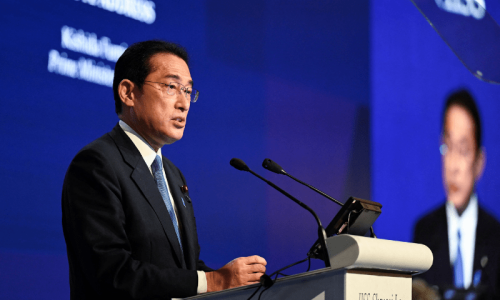
The nation is facing growing labour shortages, and Prime Minister Fumio Kishida has vowed policies including financial aid for families, easier childcare access and more parental leave.
Births in 2023 fell for the eighth consecutive year to 758,631, a drop of 5.1 percent, preliminary data showed. The number of deaths stood at 1,590,503.
Echoing similar warnings made previously by Kishida, ruling-party lawmaker Goshi Hosono on Wednesday called the low birth rate a “national threat”.
“If the situation is left alone, the economy will lose its vitality and social security will become difficult to maintain,” he said.