Famine becomes latest threat in Gaza’s north


 0
0
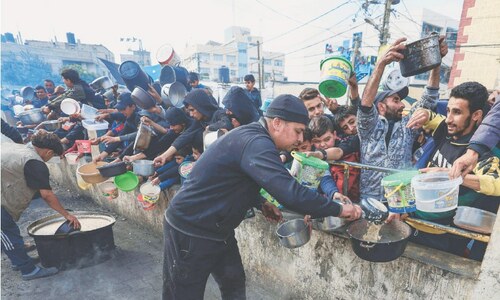
GAZA STRIP: Like many in northern Gaza, Shadi Jenina has resorted to desperate measures to stave off hunger for his five children — grinding up animal feed into flour.
“We’re looking for food for birds, animals and livestock... such as barley, corn, wheat and fodder. We grind them and make flour,” Jenina, 40, explained.
“The bread is dry and not suitable for humans but we’re forced to eat it,” he said, adding they struggle to feed their children. The Gaza Strip was already one of the poorest places in the Middle East even before Israel declared a complete siege on the territory.
Though much of Gaza was reliant on food aid, enough of it was entering the territory to largely meet the needs of its 2.4 million inhabitants. But now, after more than four months of war that has flattened huge swathes of the Strip, Gazans are inching closer towards famine, according to the UN’s World Food Programme.
And the situation in the north of the coastal territory is particularly acute, with international aid agencies unable to get in.
‘Pure misery’
Since the start of this year, Israel has only given permission to 12 out of 77 United Nations evaluation missions to assess the needs of people in northern Gaza. “There are about 300,000 people in the north and I have no idea how they’ve survived,” said Andrea De Domenico, head of the UN humanitarian agency OCHA in the Palestinian territories.
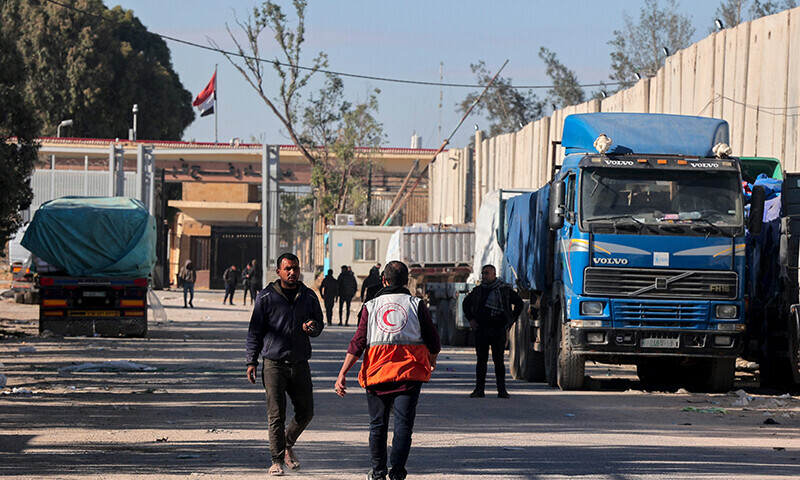
“What we managed to bring up there is absolutely not enough. It is pure misery,” he said. “Repeatedly when we are allowed to cross the checkpoint at Wadi Gaza to deliver food assistance, thousands of people block and unload the trucks at the risk of being shot.” In the last few days, the non-profit organisation World Central Kitchen, which made thousands of meals a day, said it had been forced to leave Gaza City for Rafah in the south.
Rafah, on the border with Egypt, has been turned in recent weeks to a vast camp for some 1.4 million people — most of them displaced by Israel’s relentless bombing. Israel, though, is preparing a ground invasion of Rafah, prompting fears of a bloodbath.
Published in Dawn, February 18th, 2024