WASHINGTON: The February 8 elections in Pakistan have not garnered significant attention in Washington, where discussions primarily revolve around the Gaza conflict, the upcoming US presidential election, and the ongoing situation in Ukraine.
Nevertheless, the daily news briefings at the US State Department present a contrasting perspective. A group of journalists consistently highlights the Pakistani election, and interestingly, not all of them represent the Pakistani media.
Pakistani journalists spark the conversation, and as others join in, AP‘s Matthew Lee skillfully seizes the opportunity, never missing a loose ball. AFP’s Shaun Tandon plays his part well, deftly scoring quick singles through the slips.
Other journalists also contributed. However, the State Department spokesperson Matthew Miller, positioned at silly mid-off, adeptly blocked the opposing shots.
Gaza conflict, US presidential election, Ukraine get more media attention
American journalists, including those of South Asian origin, often raise concerns and highlight issues that might otherwise slip through the cracks. Despite the lack of official attention, these scribes are diving into the intricacies of Pakistan’s political landscape, painting a human-interest story that transcends typical news rhetoric.
Amidst the escalating election fever in Pakistan, Miller also finds himself playing the role of an umpire as well. He carefully refrains from hastily raising his finger at every appeal, navigating a delicate dance to ensure he doesn’t inadvertently tip the scales.
Other officials in Washington also walk a tightrope, carefully avoiding the appearance of favouring former prime minister Imran Khan, who accuses the US of toppling his government.
They also strive to steer clear of publicly endorsing the Pakistani establishment while navigating this delicate balance.
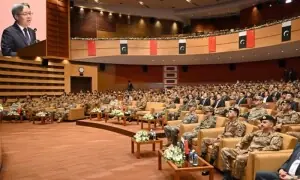
Attempts to raise Pakistan-related issues during White House or Pentagon briefings often yield similar responses, as Pakistani journalists experienced during the army chief’s visit to Washington late last year.
The Pentagon, in particular, provided only a succinct two-liner on the visit, reflecting the challenges in garnering detailed responses on these matters.
In the midst of this intricate diplomatic ODI, American journalists amplify the whispers of concern that echo through the valleys of Pakistani democracy. They delve into the intricacies of the electoral process, shedding light on issues that often lurk in the shadows. From concerns about transparency and voter intimidation to the role of social media in shaping public opinion, the journalists craft a narrative that transcends political jargon.
In a recent news briefing, Miller showcased a deft diplomatic dance as he fielded questions about Imran Khan being sentenced to 10 years of imprisonment over a case that involves Khan accusing Washington of toppling his government.
The briefing took a cheeky turn when a journalist, drawing parallels with Venezuela, pressed Miller on why a similar judgment by a Venezuelan court was deemed political while Pakistan’s was considered a matter for its courts. Miller responded, “They are different situations,” skillfully sidestepping a direct comparison.
When US scholars of Pakistan affairs, particularly those of Pakistani origin, were asked to explain the US position on these elections, they provided a nuanced perspective on Washington’s stance.
Distinguished Professor of International Relations at the National Defence University, USA, Hassan Abbas, underscored the State Department’s cautious approach, stating, “I believe the State Department is very careful in its messaging and endeavors to project its neutrality as far as Pakistan’s internal political affairs are concerned”.
Michael Kugelman, Director of South Asia at the Wilson Center, highlighted the deliberate use of measured language, noting, “The US is using relatively anodyne language that won’t ruffle any feathers in Islamabad, or Rawalpindi for that matter”.
Shuja Nawaz, Distinguished Fellow at the South Asia Center, Atlantic Council, expressed concern about the US prioritising short-term interests, asserting, “The United States appears to be playing yet again a ‘short game’ in its relationship with the military power center in Pakistan”.
Nawaz criticised the US approach, emphasising, “Calls for free and fair elections carry little weight in officialdom in Pakistan but sound hollow among the general public and Khan’s supporters in particular.”
Abbas noted that the State Department has been more forthcoming in commenting on similar situations in other countries. “This is a different approach than for example what we can observe in case of Bangladesh where US emphasised adherence to human rights standards in recent years.”
Abbas argued that “election in itself means nothing as many dictatorial regimes also conduct elections and manage the results they want. It’s only transparency and fairness that facilitates democratic process.”
He demanded that independent international as well as local monitors should be allowed free access to election machinery in Pakistan so the elections could have some authenticity.
Nawaz claimed that the US administration was seeking a partner in regional anti-terrorism monitoring and action and munitions for Ukraine rather than a longer-term relationship with the people of Pakistan.
Kugelman said that Washington was purposely using a “boilerplate language” to ensure that the US “does not get dragged into a highly volatile political environment in Pakistan now”.
Their views paint a complex picture, with the US navigating a delicate balance in expressing support for democracy while avoiding undue interference.
A detailed version of this report can be accessed on Dawn.com
Published in Dawn, February 3rd, 2024