Pakistan-born Aussie cricketer Khawaja insists armband was not political, after ICC reprimand

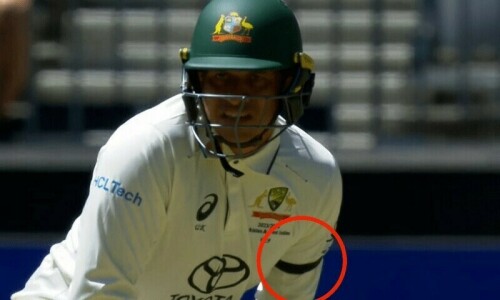
Australia’s Usman Khawaja said on Friday that a black armband he wore in the first Test against Pakistan was for a “personal bereavement” and not politically motivated, after the star batter was reprimanded by the International Cricket Council (ICC).
The Pakistan-born opened donned the armband during the team’s 360-run victory in Perth, a move seen at the time as support for people in Gaza, where thousands have been killed in Israeli bombardment.
He had wanted to wear shoes emblazoned with the hand-written slogans “Freedom is a human right” and “All lives are equal” during the match, saying he had been hit hard by the Israel-Hamas conflict.
But Khawaja, who is Muslim, was told that it flouted ICC rules on messages that relate to politics, religion or race. He covered the messages with tape and wore the armband.
Khawaja told reporters he would take up the reprimand with the ICC and that he only wanted consistency in the application of its rules.
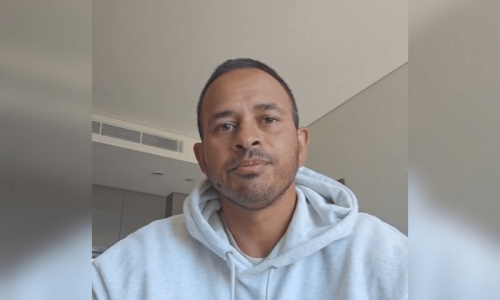
“I told them it was for a personal bereavement. I never ever stated it was for anything else. The shoes were a different matter, I’m happy to say that,” the 37-year-old said at the Melbourne Cricket Ground.
“But the armband (decision) made no sense to me.
“I respect … the ICC and the rules and regulations they have.
“I just asked - and will be asking them and contesting that they make it fair and equitable for everyone and they have consistency in how they officiate. That’s all I ask for.”
An ICC spokesman on Thursday said Khawaja had displayed a “personal message” against Pakistan without seeking prior approval from Cricket Australia (CA) and the ICC as required.
Respective way
Khawaja said players had displayed personal messages during past matches without ICC approval and not been sanctioned.
“Guys have put stickers on their bats, names on their shoes and all sorts of things in the past without ICC approval and never been reprimanded,” said Khawaja, adding he would not wear the armband again.
“From my point of view, that consistency hasn’t been done yet.”
Khawaja has been vocal on social media with calls for an end to the bloodshed in the Gaza Strip, where nearly 20,000 Gazans have died since the start of the conflict with Israel, according to the Palestinian health ministry.
Israel’s Prime Minister Benjamin Netanyahu has vowed to fight on until the eradication of Hamas, the group that sent fighters over the border into southern Israel on October 7, taking some 240 hostages and killing 1,200 people.
Cricket Australia did not endorse Khawaja’s boots or his armband but CEO Nick Hockley said it was working with him and the ICC to see whether there was a “really respectful way” the batsman could share his message on the field.
“That is the subject now of ICC consideration,” Hockley told a press conference alongside Khawaja.
The second test against Pakistan starts at the Melbourne Cricket Ground on Tuesday.
The ICC has been selective about allowing players to wear political messages during matches.
West Indies players were permitted to wear ‘Black Lives Matter’ logos on their shirts during a test series against England in 2020.
England’s Moeen Ali, however, was banned from wearing wristbands with messages ‘Save Gaza’ and ‘Free Palestine’ during a home test against India in 2014.