Water from Egypt tastes ‘like sugar’ to parched Gazans



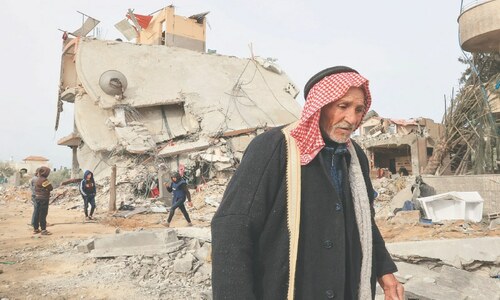
CAIRO: For Gaza resident Zaki Abu Sleyma the water now flowing into the devastated enclave from a desalination project in Egypt tastes “like sugar” after weeks of Israel’s bombardment and siege left him and many others drinking unclean, brackish water.
The water comes from three plants built by the United Arab Emirates on the Egyptian side of the border and being pumped into Rafah since Tuesday, part of an effort to relieve one of the biggest humanitarian challenges in Gaza.
“We were really suffering... we used to bring water from the sea before. This water tastes like sugar, it is drinkable,” Abu Sleyman said.
But while clean water is badly wanted, Gaza’s ruined infrastructure means it is hard to distribute beyond the border town of Rafah, let alone pump up to rooftop tanks that allow people to use it in the enclave’s remaining buildings.
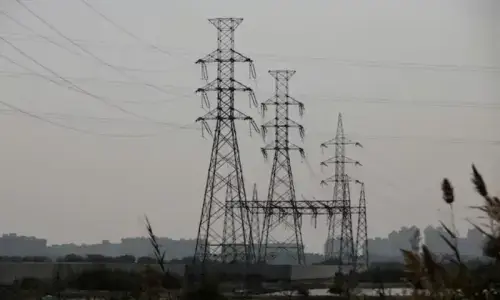
Israel cut off all external electricity supply to Gaza after the Hamas raid on Oct 7. Its siege of the Palestinian territory has also stopped most fuel supplies, meaning local power generators do not work either.
“We hope they can provide us with an electricity station... as you can see we fill the buckets and take the water upstairs,” said Abu Sleyma. Filling upstairs tanks so that water can be used in taps in the house is hard, painful work.
Even in Rafah, where the Israeli army has told civilians to seek refuge, the dearth of food and clean water is so severe it is causing people to lose weight and get ill.
At a water tank standing among houses in Rafah, a group of children took turns cupping their hands to drink from a pouring pipe, a rare sight in recent weeks.
Mohammed Sobhi Abu Reyala, head of water and sewage directorate in Jabalia, said that the displacement of thousands of Gazans to Rafah has compounded already existing problems in the city, where there’s a lack of fuel to operate wells.
“Honestly, this new line which was provided via our brothers in the Arab Republic of Egypt, our brothers in Egypt, played a major role in alleviating the suffering of the displaced and the people of Rafah concerning water,” sad Abu Reyala.
The plants, connected to Egypt’s border with Gaza Strip by a 900-metre pipeline, desalinate around 600,000 gallons of water per day, covering the needs of around 300,000 people.
Published in Dawn, December 22nd, 2023