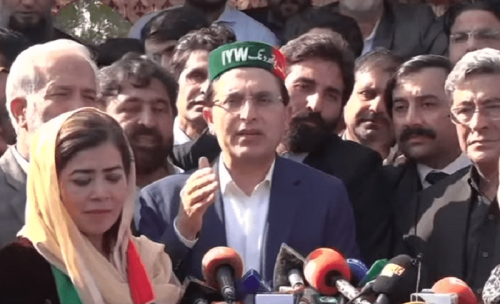
The hullabaloo over the PTI’s intra-party elections has once again put the spotlight on the inherent lack of democracy that plagues most of Pakistan’s major political parties, with many raising questions about the democratic credentials of leaders who are unwilling to let popular opinion dictate who should and shouldn’t be in high-office.
While the Election Commission of Pakistan-mandated exercise focused attention on the PTI’s internal hierarchy and revived criticism over the Imran Khan-centric nature of the party, the fact remains that its machinery is no different from that of most other parties, whose office-bearers consist of the same familiar faces, year in and year out.
The criticism on PTI aside, the focus and intensity with which the commission acted to have this intra-party election conducted has raised eyebrows, for the simple fact that the commission has rarely given such orders to any other political party.
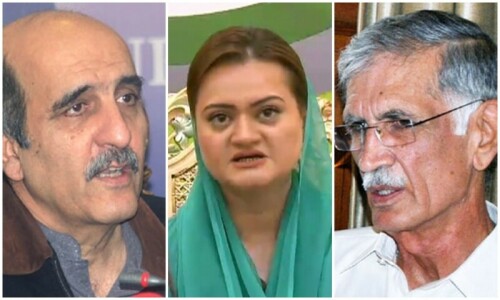
For example, in January of this year, ECP ordered the PML-N to hold its own intra-party elections. In response, the party put out a list of office-bearers that had hardly changed from its previous iteration, with everyone from president Shehbaz Sharif to information secretary Marriyum Aurangzeb being elected unopposed, in the absence of any other contenders.
Analysts question criticism of PTI’s intra-party polls when nearly every party suffers from an internal democratic deficit
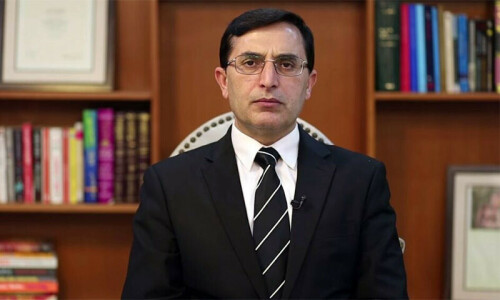
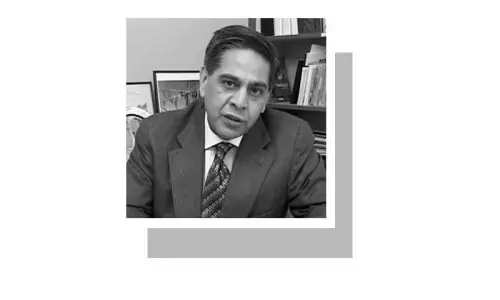
Former Senator Mustafa Nawaz Khokhar, who recently parted ways with the PPP, told Dawn that democracy was lacking in almost all mainstream political parties. In his view, democratic leadership emerged from the grass-roots level in two ways, through students’ unions and local governments.
However, he contended that most parties were against both, as senior leaders did not want to see their juniors excel as they feared for their own relevance. “No one can take the throne from Nawaz Sharif in PML-N, from Zardari in PPP and from Imran Khan in PTI,” he said.
He lamented how there was no culture of debate within parties, which prevented dissent from being highlighted.
“In PPP, we had contested last general elections against Balochistan Awami Party (BAP), but the next week we got votes from BAP in Senate elections. Today, the PML-N has taken a contradictory position from its old slogan of Vote Ko Izzat Do (give respect to the vote). Likewise, Imran Khan had installed two weak persons — Usman Buzdar and Mehmood Khan — as chief ministers so he could control them easily,” he added.
Similarly, analyst and senior journalist Zahid Hussain was of the opinion that political parties had been made into family enterprises, where so-called elections were conducted just to meet ECP requirements.
He said no one could contest intra-party elections against Imran Khan in PTI, Asif Zardari in PPP and Nawaz Sharif in PML-N. “If anyone raises his voice against them within their parties, he will be no more in that party the next day,” he added.
Mudassir Rizvi of the Free and Fair Election Network (Fafen) said the debate on elections within parties has been going on for the past 20 years without knowledge of the law that permitted parties to conduct elections according to its own methodology.
Under the Elections Act 2017, a political party is bound to hold intra-party polls in accordance with the constitution of that particular party once every five years.
He said the act made it mandatory for parties to inform the commission within seven days if they made any amendment to their constitutions.
Mr Rizvi said it was mandatory for all parties to submit a list of at least 2,000 members at the time of registration, and the ECP can insist that their electoral college must not be less than 2,000 voters.
Published in Dawn, December 4th, 2023