ISLAMABAD: The caretaker government, which is in loan review talks with the IMF, has decided to finalise a climate financing policy at the earliest and place three more crucial state-owned enterprises (SOEs) under the financial surveillance of the Ministry of Finance’s Central Monitoring Unit (CMU), which is yet to become operational.
The entities slated for enhanced oversight include the Pakistan National Shipping Corporation (PNSC), Pakistan Post, and Pakistan Broadcasting Corporation (PBC).
The decision emerged after comprehensive discussions between the visiting IMF mission and the finance, planning and energy ministries, Nepra, FBR and the SBP.
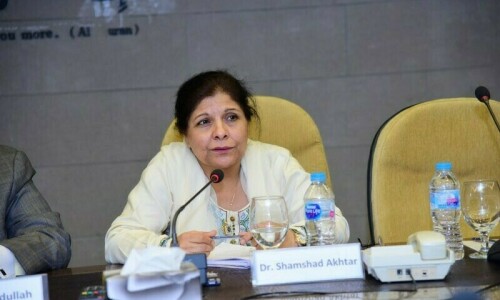
Sources told Dawn that the IMF team completed the technical round on Friday. The policy-level talks, to be led by Caretaker Finance Minister Dr Shamshad Akhtar, will begin on Monday and is expected to be concluded before the following weekend.
The two sides have agreed to roll out the SOE policy and update the financial performance of all these entities by the first half of December and bring three more state firms under corporate governance rules and direct monitoring of the finance ministry. Both sides have also recognised the urgency of finalising a climate financing policy, which is crucial for accessing international aid and loans related to climate change and greenhouse emission initiatives.
Technical round of talks with IMF concludes; policy-level discussion to begin from Monday
On the CMU, the government informed the IMF team that its launch has been delayed due to recruitment challenges, as the unit struggles to attract qualified experts. However, the hiring process has been restarted with improved terms to address this issue.
The revised SOE policy draft with minimal changes has also been finalised and is expected to be cleared by the relevant cabinet committee and the subsequent approval by the federal cabinet.
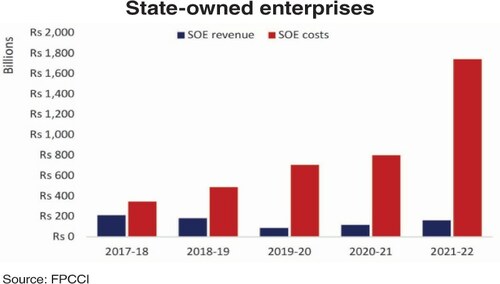
Interestingly, the SOEs (Governance and Operations) Act of 2023, passed in February, has also remained unimplemented even though the performance of state-owned firms deteriorated because of a lack of autonomy, external interference, and the appointment of inappropriate boards of directors and CEOs.
Under the draft SOE policy, the CMU would collect and update the financial results of all state firms by December to the satisfaction of the IMF and act as a hub for coordination with line ministries and boards of directors. However, the unit will not interfere in the day-to-day affairs of the SOEs.
Under the SOEs Act, most board members will be appointed on independent nominations and given security of tenure. The board will select CEOs without any government interference, though the federal cabinet will still approve policy guidelines.
The government will retain strategic state-owned enterprises but phase out non-strategic ones. It will not set up any new SOE in future unless required for strategic reasons or under an agreement with any country and gradually off-load most of the existing 200 entities.
For existing SOEs, the government will devise a mechanism to gradually privatise or divest these firms as private-public partnerships. Each government division responsible for SOEs must develop a reform plan, including proposals such as listings, restructuring, mergers, public-private partnerships, and asset sales.
This comprehensive approach, required under the IMF programme, aims to reform the SOE sector, enhancing efficiency, financial stability, and accountability in the country’s public sector enterprises.
Published in Dawn, November 11th, 2023