ISLAMABAD: A day after a substantial decline in fuel prices in the country, Caretaker Prime Minister Anwaarul Haq Kakar on Monday asked provinces to reduce the prices of essential commodities and services.
“All efforts should be directed towards transferring the benefit of reduction in petroleum prices to the people of Pakistan,” the interim PM wrote on social media platform, X (formerly Twitter).
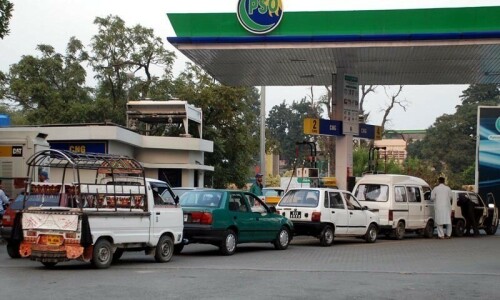
In a significant development on Sunday, the government had slashed petrol prices by Rs40, and it is now being sold at Rs283.33 per litre, down from its previous price of Rs323.38 per litre at retail level.
The prime minister issued the directive at both the federal and provincial levels, calling for the activation of a strict price control mechanism and emphasising the strict implementation of his directive.
Issues directives to enforce strict price controls countrywide
According to the PM’s Office, provincial governments have taken action after receiving the PM’s message.
A senior official from the PMO told Dawn that before departing for China on a five-day official visit on Monday, PM Kakar’s instructions were conveyed to the provincial governments through official channels.
It has been observed that both the Pakistan Tehreek-i-Insaf (PTI) regime and the previous government of the Pakistan Democratic Movement (PDM) had failed to maintain control in the market, where traders were setting their own prices without any oversight from local administrations. This trend has also continued in the current interim set-up. However, the PM now appears determined to curb artificial price hikes in consumer items.
Subsequently, caretaker chief minister of Punjab Mohsin Naqvi issued a deadline of 48 hours to relevant authorities to pass on the benefit of significant reduction in petroleum prices by ensuring a drop in the prices of essential commodities and transport fares.
For transport sector, at least 10 per cent decrease in fares had been suggested at a meeting chaired by the chief minister. He also emphasised the necessity of a relentless crackdown on hoarders and profiteers.
Also, caretaker chief minister of Balochistan Mir Ali Mardan Domki directed commissioners, deputy commissioners, price committees and other concerned departments to fulfill their responsibilities by providing much-awaited relief to the masses after massive cut in fuel prices.
Media reports said that short-term inflation witnessed a year-on-year increase of 26.25 per cent for the week ending on Sept 14, mainly due to a sharp rise in the retail prices of vegetables across the country, showed the official data released last month.
In the wake of the Torkham border closure with Afghanistan, the prices of vegetables have experienced a dramatic surge.
The short-term inflation, measured by the Sensitive Price Index (SPI), remained elevated. It, however, declined 0.25pc from the preceding week after an upward increase for the past seven consecutive weeks.
Of the 51 items in the SPI basket, prices of 24 goods soared, eight dropped and 21 remained unchanged compared to the previous week.
During the week under review, the items whose prices increased the most over the same week a year ago were: wheat flour (114.37pc), gas charges for Q1 (108.38pc), cigarettes (98.11pc), rice basmati broken (91.07pc), sugar (90.27pc), chilies powder (84.84pc), rice Irri-6/9 (82.03pc), tea Lipton (76.19pc), Gur (73.95pc), gents sponge Chappal (58.05pc), salt powdered (55.08pc), gents sandal (53.37pc), bread (45.79pc) and powdered milk (43.05pc).
The biggest rise week-on-week was in the price of tomatoes (4.29pc), garlic (4.21pc), bread (3.92pc), onions (3.60pc), pulse Masoor (3.19pc), salt powdered (2.77pc), shirting (1.68pc), pulse Moong (1.66pc), lawn printed (1.32pc), pulse Mash (1.25pc) and long cloth (1.18pc).
In May, the SPI stayed above 45pc for three weeks after hitting an all-time high at 48.35pc.
Media reports said Pakistan’s inflation rate remained above the target at 27.4pc in August, as reforms set out as conditions for an IMF loan complicate the task of keeping price pressures and declines in its currency in check.
According to PBS data, food inflation has stayed elevated at 38.5pc year-on-year. Economic stabilisation is a top challenge for the country as it embarks on a narrow recovery path after a $3 billion IMF bailout that averted a sovereign debt default.
Saleem Shahid in Quetta also contributed to this report
Published in Dawn, October 17th, 2023