QUETTA: The Wadh town of Khuzdar district continues to be a hotspot for violent confrontations between two factions of the Mengal tribe for months, as armed men from both sides remain in trenches equipped with heavy automatic weapons.
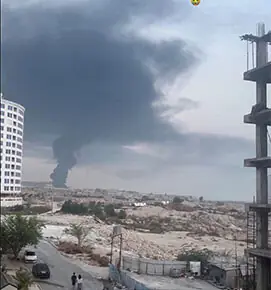
Officials said on Sunday that 10 people have been killed and several others were injured so far in the heavy exchange of fire and mortar shelling from the two sides.
The casualties also include truck drivers and other travellers who were passing through the troubled area on the Quetta-Karachi National Highway.
“A truck carrying motorcycles was caught in the crossfire on Sunday while passing through the troubled area of Wadh,” a security official said, requesting anonymity.
Exchange of fire, mortar shells between two Mengal factions claim 10 lives so far
He said that the situation has escalated to a point where heavy firing has become commonplace, leading to prolonged closures of the highway and the suspension of all types of traffic.
However, a delegation of religious leaders and tribal elders, led by Maulana Muhammad Khan Sherani, has arrived in Wadh to make efforts to agree both sides for a permanent ceasefire and initiate negotiations to resolve the issue according to the religious and tribal traditions and values.
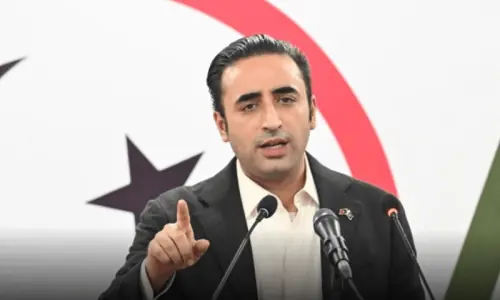
According to reports, the delegation met Balochistan National Party (BNP-Mengal) President Sardar Akhtar Jan Mengal and discussed the issue. Mr Mengal has welcomed the delegation and its efforts. The delegation will also approach Mir Shafiq Mengal for a meeting.
Earlier in July, a reconciliation jirga led by the chief of the Sarawan tribe Nawab Aslam Raisani and his younger brother Haji Lashkari Raisani had managed to broker a ceasefire after meetings with the elders of both groups.
However, the ceasefire proved short-lived, both groups broke the ceasefire they had agreed to as a result of efforts made by Mr Raisani and other tribal elders.
A large number of people, including minorities, migrated to other areas of Balochistan due to the continuous gun battle between the two rival groups in August.
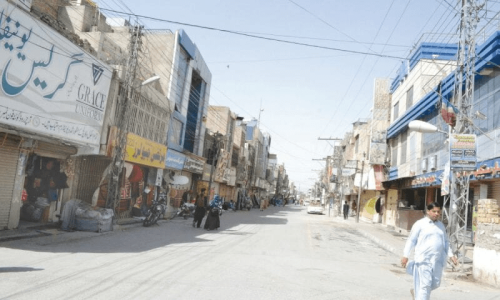
Officials had stated that after breaking the ceasefire, both sides had used heavy weapons against each other, resulting in the closure of all bazaars, shops, and business centres and creating shortages of food and other essential items in Wadh town and its surrounding areas.
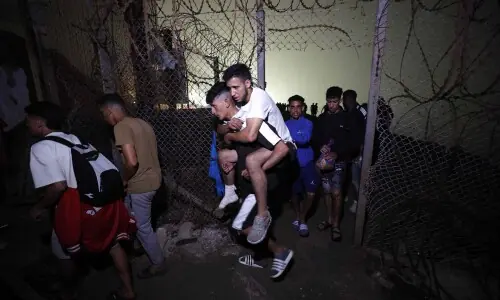
The local population had started moving to other areas to save their lives and avoid any significant losses due to the continued exchange of fire. Hindu traders mostly left Wadh as their businesses were badly affected due to the closure of all bazaars.
“A large number of families shifted to other towns of Balochistan and Sindh to protect their lives. Most people belonging to the Hindu community have fled Wadh. Around 300 families of the Hindu community were living in Wadh, but now the majority of them shifted to other areas,” a resident earlier told Dawn.
Published in Dawn, October 9th, 2023