Israel on cusp of region-reshaping peace with Saudi Arabia, Netanyahu says


 0
0


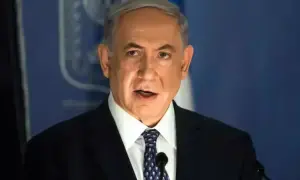
Israeli Prime Minister Benjamin Netanyahu said on Friday he believed his country was on the cusp of peace with Saudi Arabia, predicting it could be clinched by US President Joe Biden and reshape the Middle East.
Yet, amid urging by Riyadh and Washington that the Palestinians be included in the diplomacy, Netanyahu told the United Nations General Assembly in New York that Palestinians should not be allowed to veto the regional dealmaking.
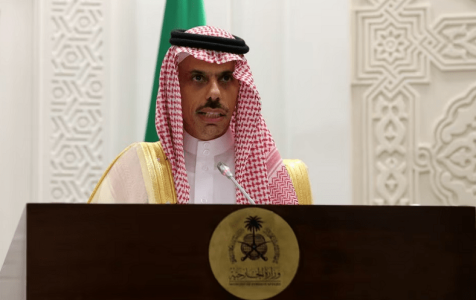
Expectations that Israel might normalise relations with Saudi Arabia, the home of Islam’s two holiest shrines, have been ratcheted up this week. Saudi Crown Prince Mohammed bin Salman said a deal was getting closer by the day and Netanyahu and Biden held a long-awaited meeting to discuss the prospects.
Netanyahu described as a precursor the 2020 normalisation accords between Israel and the United Arab Emirates and Bahrain, known as the Abraham Accords and sponsored by then-US President Donald Trump.
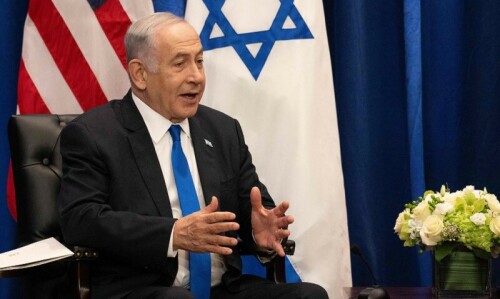
“There’s no question: The Abraham Accords heralded the dawn of a new age of peace,” he said. “I believe we’re on the cusp of a more dramatic breakthrough: A historic peace between Israel and Saudi Arabia.”
Such a deal would likely require broad support among US lawmakers — a tall order with a presidential election in 2024.
While crediting Trump for the previous deal, Netanyahu made clear he hoped the current administration would clinch this one.
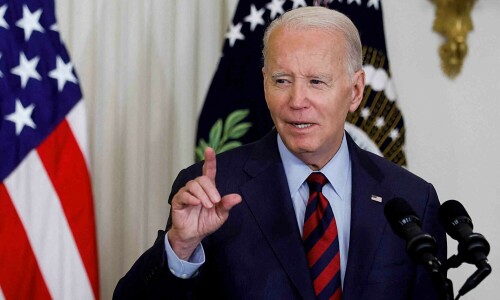
“I believe we can achieve peace with Saudi Arabia with the leadership of President Biden,” he said.
Though he voiced willingness to seek some accommodation with the Palestinians — whose statehood goals are ruled out by his hard-right government — Netanyahu said: “We must not give the Palestinians a veto over new peace treaties with Arab states.”
On Thursday, Palestinian President Mahmoud Abbas told the same forum: “Whoever thinks peace in the Middle East is possible before our people achieved their full right is delusional.”
Netanyahu, who has often used the UN podium to warn against Iran, described his country’s arch-foe as the “fly in the ointment” that would try to wreck a deal with Saudi Arabia.
But he cast normalisation as already in the works, citing the now three-year-old air corridor for Israeli carriers over Saudi territory and an ambitious plan, announced by Biden this month, to make both countries part of a rail and shipping network that would run from India to the Mediterranean Sea.
He illustrated the latter with a red line he drew across a regional map — a play on a 2012 UN speech in which he used a marker to draw a proposed “red line” for Iran’s nuclear drive.
“Today I bring this marker to show a great blessing,” he said, deeming normalisation with Saudi Arabia “an extraordinary change, a monumental change, another pivot of history.”