Japan launches ‘Moon Sniper’ lander into space

TOKYO: Japan’s “Moon Sniper” mission blasted off on Thursday as the country’s space programme looks to bounce back from a string of recent mishaps, weeks after India’s historic lunar triumph.
Only the United States, Russia, China and as of last month India have successfully landed a probe on the Moon, with two failed Japanese missions — one public and one private.
Watched by 35,000 people online, the H-IIA rocket lifted off early on Thursday from the southern island of Tanegashima carrying the lander, which is expected to touch down on the lunar surface in early 2024.
To cheers and applause at mission control, the “SLIM” Moon probe and the XRISM space research satellite developed with the US and European space agencies both separated soon afterwards.
The launch had already been postponed three times because of bad weather.
Satellite will perform ‘high-resolution’ X-ray observations of hot gas plasma winds in the universe
The Smart Lander for Investigating Moon (SLIM) is nicknamed the “Moon Sniper” because it is designed to land within 100 metres of a specific target on the surface.
That is much less than the usual range of several kilometres.
“By creating the SLIM lander, humans will make a qualitative shift towards being able to land where we want and not just where it is easy to land,” Japanese space agency JAXA said before the launch.
“By achieving this, it will become possible to land on planets even more resource-scarce than the Moon.” Globally, “there are no previous instances of pinpoint landing on celestial bodies with significant gravity such as the Moon,” the agency added.
XRISM will perform “high-resolution X-ray spectroscopic observations of the hot gas plasma wind that blows through the galaxies in the universe”, according to JAXA.
These will help study “the flows of mass and energy, revealing the composition and evolution of celestial objects”.
Serious toy
The lander is equipped with spherical probe that was developed with a toy company. Slightly bigger than a tennis ball, it can change its shape to move on the lunar surface.
India last month landed a craft near the Moon’s south pole, a historic triumph for its low-cost space programme.
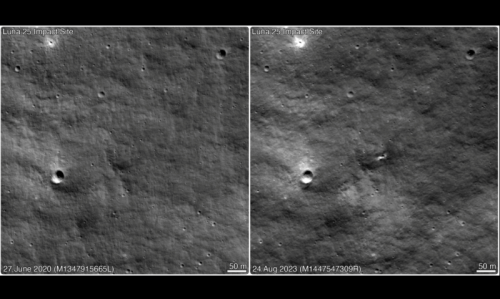
Its success came days after a Russian probe crashed in the same region, and four years after a previous Indian attempt failed at the last moment.
India on Saturday also launched a probe carrying scientific instruments to observe the Sun’s outermost layers in a four-month journey.
Japan’s past attempts have also gone wrong, including last year when it sent a lunar probe named Omotenashi as part of the United States’ Artemis 1 mission.
The size of a backpack, Omotenashi would have been the world’s smallest Moon lander but it was lost.
And in April, Japanese startup ispace failed in an ambitious attempt to become the first private company to land on the Moon, losing communication with its craft after what it described as a “hard landing”.
Japan has also had problems with its launch rockets, with failures after liftoff of the next-generation H3 in March and the normally reliable solid-fuel Epsilon last October. In July, the test of an Epsilon S rocket, an improved version of the Epsilon, ended in an explosion 50 seconds after ignition.
Published in Dawn, September 8th, 2023