0
0

KARACHI: Expressing concern over the sky-rocketing inflation and hike in the prices of basic commodities, representatives of Pakistan Kissan Mazdoor Tehreek (PKMT) and Roots for Equity have demanded that the government take emergency steps to provide relief to common man and impose agriculture tax on landlords owning more than 50 acres besides bringing real estate sector into tax net.
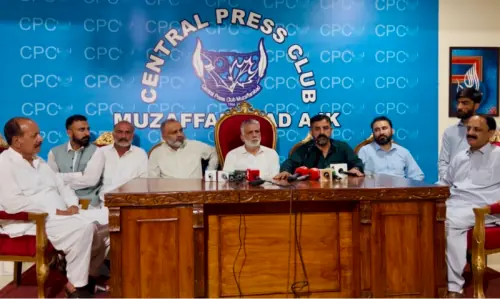
Speaking at a press conference at the Karachi Press Club on Monday, PKMT secretary Wali Haider highlighted unending misery of peasants and landless farm workers and said today farmers were being compelled to abandon their land, factories were shutting down, and a staggering number of workers were losing their livelihoods.
“Under the oppressive working conditions, women farmers and workers are enduring economic hardship, hunger, poverty and social exploitation. The skyrocketing prices of food and commodities, especially the soaring electricity bills, have pushed Pakistan’s working population to the brink, forcing rural communities to migrate to urban centres and abroad, often resorting to illegal means, even at the risk of imprisonment or loss of life,” he said.
The crisis had spawned grave social issues and deteriorated law and order in the country, he added.
He informed the audience that farmers had held protests today (Sept 4) in different parts of the country including Shikarpur, Khairpur, Ghotki, Haripur, Lower Dir, Mansehra, Sahiwal and Rajanpur, against the ongoing crippling inflation.
Dr Azra Talat Sayeed of Roots for Equity said the government was responsible for the “intense economic debacle” gripping the nation.
“The PKMT represents the interests of small and landless peasants and workers who vehemently reject the policies of global capitalist and imperialist system. We stand united against the International Monetary Fund (IMF), World Trade Organisation (WTO), and their agreements, which have plunged workers, the small and landless farmers into depths of hunger, poverty, unemployment and ever sharpening inflation.”
The speakers regretted that while the IMF-driven conditionalities had led to intense misery in the lives of a vast majority of Pakistanis, the country’s elite class continued to burden the national exchequer with free electricity, oil, gas, and illicit expenditures in the name of state benefits.
The gravity of the situation, they said, demanded an immediate shift towards pro-people policies.
“We categorically reject the government’s rising utility rates in response to the current economic crisis, Rather than imposing additional burden on the people, we demand the government implement an agricultural tax on landlords owning more than 50 acres of land, especially the minority feudal elite, as well as enforce taxes on real estate,” said Mr Haider.
He also demanded just and equitable land distribution as a way of increasing self-sufficiency and government support to local manufacturers.
Allah Dino of PKMT said the grave situation was forcing the poor peasants to seek loans from microfinance schemes at high interest rates that they could not pay back. Consequently, they faced abuse and threats from lenders, he said.
“The government should extend subsidies to agriculture and agricultural inputs, especially electricity, petrol, and essential products in order to bring relief to the working class. Besides, steps are needed to create decent employment opportunities,” he said.
Published in Dawn, September 5th, 2023