LAHORE: The official strategy of raiding the premises of wheat hoarders and forcing them to sell their stocks to ease the market is turning out to be an exercise in self-defeat, as it has failed to cool the market down for the last six weeks.
According to the wheat watchers, the market has been keeping a high trend for two reasons: the capital cost of keeping the stocks and last year’s mismanagement, which doubled profits for hoarders, forcing them to wait for a further rise in the market.
They say that supply has not been an issue so far, price is. None of the stakeholders, especially the millers, have complained about the supply issue: it is available but at a high price.
The administrative actions, they say, are only improving the supply side, which has not been the issue. Even on this side, official success has not gone beyond 15,000 tonnes — less than one-day consumption — in the last 45 days.
It did not help on the price side, insists trader Muhammad Naeem. “When officials raid premises and force the hoarder to sell his stocks, at what price would he sell? Obviously, it depends on the prevailing market rate. The official procurement is over. So, the department cannot procure the raided stock nor can it force the hoarders to sell commodities at the price of their choice. The strategy always had limited success and now it has reached the point of diminishing returns,” Naeem says.
This strategy also had another flaw, adds Parvaiz Hassan Khan, farmer from central Punjab.
“The department does not raid farmers’ stocks for the feared political backlash,” he said.
“This year, farmers, who could afford it, have also held stocks because of the massive profits that the middleman made last year. With farmers falling outside departmental preview, raids have been reduced to an urban or semi-urban middleman, compromising the result. In a nutshell, the strategy was mistaken because it chose the wrong side of the market and then reduced its area of operation for political reasons.”
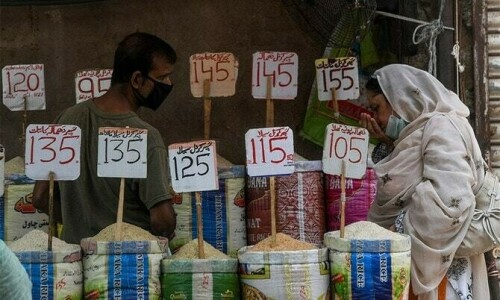
On the price side, the government seems resigned to the fact that since it procured at Rs3,900 per maund, the current market price ranging between Rs4,500 to Rs4,700 is acceptable.
This much is clear from the official inaction on the pricing front, says Muhammad Ramzan, a trader from the city.
“The government knows with markup touching 25 per cent and investment doubling on purchase, Rs500 to Rs700 may be a fair margin on three or four months’ stocks. That is why it is neither ready to come clean on the import option nor ready to do something domestically — like early releases.
“To make the matter worse now, the caretaker set-up has arrived at the centre, which would think hundred times before committing to import that costs dollars. So, the current strategy is to wait and see. If the current rates, which have been sustaining for the last two months, stay for another month or so, the official releases may deal with price, depending on what price the government starts releasing its stocks, to some extent,” Ramzan says.
“It is not a matter of taking a decision, which costs dollars. But, neither the outgoing government nor the current one is ready to clear the confusion about whether import (both private and public) is allowed or not,” regrets Moeen Siddiqui — a city trader dealing in wheat as well.
“This act of the whole issue being left in limbo has hurt the market more than anybody else. The former minister for finance refused imports for dollar issues at one point. The ministry, however, says that import is always allowed with certain taxes and duties. Import window, with international price now hovering under $300 per ton — and local arrival at Rs3,600 per maund, can release some price pressure.”
“However, it may close soon as the world books its order in the Black Sea region and price starts escalating. It is advised that caretakers may find some time to think through the issue and decide: after all, they would be in power for some tough wheat months ahead, which, if left unattended, may create some social and political chaos in the country,” he advised.
Published in Dawn, August 17th, 2023