Mosques shut after religious riots near India’s capital

Most mosques were shut for Friday prayers in an important business hub on the outskirts of India’s capital after six people were killed in sectarian riots.
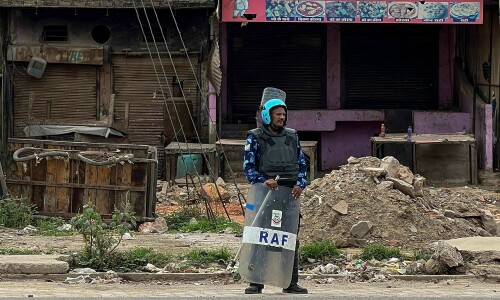
Police were deployed in large numbers outside several mosques in Gurugram — a satellite city of New Delhi and a key business centre where Nokia, Samsung and other multinationals have their Indian headquarters.
Tensions have been high in the area since Monday when mobs hurled stones at a Hindu religious procession and set cars alight in the predominantly Muslim district of Nuh nearby.
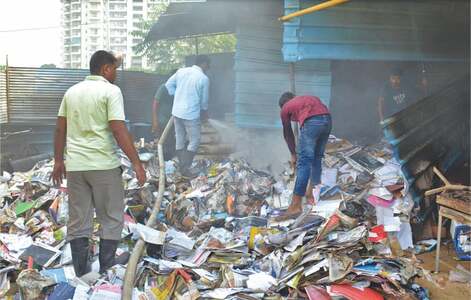
An armed mob then attacked a mosque in Gurugram on early Tuesday, killing a cleric in apparent retaliation, while several shops and small restaurants were vandalised or torched by mobs chanting Hindu religious slogans.
No major instances of violence have been reported since Tuesday night.
Some mosques in Gurugram did allow small groups to assemble for Friday afternoon prayers — the most important of the week for Muslims.
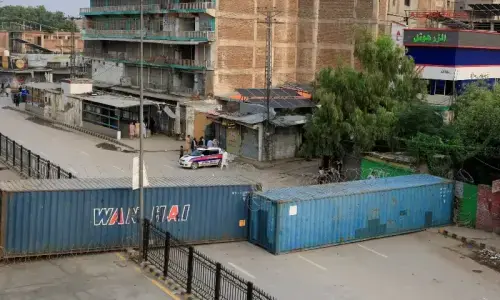
But five of the city’s main Muslim houses of worship visited by AFP were shut, with their entries heavily barricaded by police.
Officers said there was no order from authorities to shut mosques and that local Muslim leaders had appealed to worshippers to pray at home in view of the tensions.
“Police are just ensuring that the security arrangements are proper,” senior police officer Varun Kumar Dahiya told reporters.
Around 500,000 Muslims live in Gurugram, which has also been the site of a long-running dispute over access to worship.
Municipal authorities have blocked the construction of new mosques after protests by local residents.
Muslims have responded by holding prayer services in open areas, which have also been picketed by Hindu hardline groups.
Since Prime Minister Narendra Modi took office in 2014, India has seen numerous outbreaks of violence between majority Hindus and its 200-million-strong Muslim minority.
Critics accuse the ruling Hindu-nationalist Bharatiya Janata Party of marginalising the Muslim community since coming to power. Religious riots in New Delhi left 53 people dead in 2020.
And at least 1,000 were killed in 2002 during violence in Gujarat, where Modi was serving as chief minister at the time. Most of the victims were Muslims.
Tax officials raided the BBC‘s India office in February after the British broadcaster aired a documentary on Modi’s actions during the riots.
A probe appointed by India’s top court said in 2012 it did not find any evidence of wrongdoing by Modi.