Deadly India rail crash caused by faulty signal connections made during repair


 0
0


Workers repairing a rail-road barrier in India made faulty connections in the automated signalling system on the network, leading to the country’s worst rail disaster in two decades, an official probe has found.
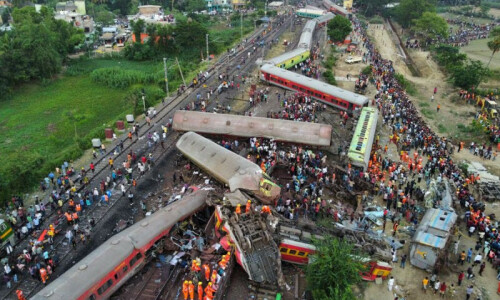
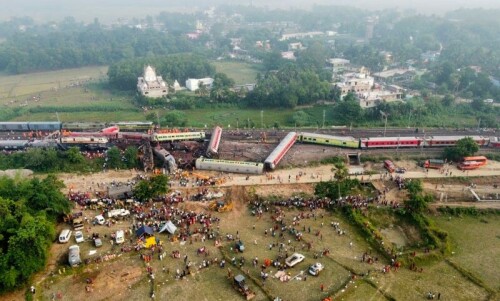
The June 2 crash at Bahanaga Bazar station, in the eastern Indian state of Odisha, killed 288 people and injured more than 1,000.
The disaster struck when a passenger train hit a stationary freight train, jumped off the tracks and hit another passenger train coming from the opposite direction.
In the probe report, seen by Reuters, the Commission of Railway Safety (CRS) investigators said the first collision occurred due to modifications done to the signalling circuit to fix frequent problems at a nearby rail-road barrier.
Local railway staff did not have a standard circuit diagram which led to a faulty connection in the signalling system when they tried to take the boom-barrier circuit offline for repair, it said. The malfunctioning system directed the passenger train onto the path of the freight train, it said.
Reuters last month reported for the first time that investigators were focusing on the repair work on the railroad barrier and its possible connection to a manual bypass of the signalling system.
Indian Railways, the fourth largest train network in the world, is a state monopoly run by the Railway Board. The board reports to the Railways Ministry.
The rail network is undergoing a $30 billion transformation with gleaming new trains and modern stations under Prime Minister Narendra Modi’s push to boost infrastructure and connectivity but the crash raised questions about whether safety was getting enough attention.
The CRS probe report said there were lapses at multiple levels in the signal and telecom department and standard operating procedures were not followed during the repair work.