ISLAMABAD: While information commissions exist at federal level and three provinces of Punjab, Khyber Pakhtunkhwa and Sindh, Balochistan Information Secretary Hamza Shafqaat on Monday revealed that the provincial government would notify the information commission in a fortnight.
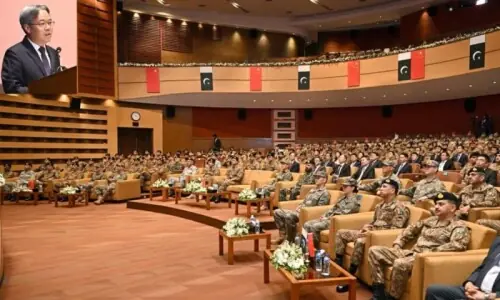
He was speaking to participants in a meeting of the National Forum of Information Commissioners (NFIC) convened by Centre for Peace and Development Initiatives in Islamabad. Information commissioners from the federal, KP, Punjab and Sindh attended the meeting.
The commissioners reiterated their commitment to promoting transparency and accountability in Pakistan, with a focus on ensuring public access to information.
Mr Shafqaat said public information officers (PIO) have been appointed, nominated in all public bodies by the order of Balochistan chief secretary, and rules have been drafted and vetted by the law department.
“The ministerial committee received the draft rules in February, and a select committee has been established to oversee the process. The Balochistan commission and the rules of the Balochistan RTI Act 2021 will be notified within the next 15 days, marking a significant step forward in promoting transparency and accountability in the province,” he said.
Earlier, CPDI executive director Mukhtar Ahmad Ali provided an overview of the historical and legislative landscape of the right to information and freedom of information in Pakistan. He highlighted that concrete efforts to promote RTI began in 2013, when dominant political parties in KP and Punjab competing in political arena added to the RTI implementation in their provinces. He emphasised that the emergence of RTI in Pakistan was the biggest reform in contemporary times, representing a transformation from secrecy to transparency. He demanded that federal and provincial governments ensure administrative and budgetary support of information commissions so that appellate bodies could perform their duties in optimal manner.
During the event, chief information commissioner Shoaib Ahmad Siddiqui discussed the progress and challenges of Pakistan Information Commission.
He identified key challenges, including shortage of staff and sanctioned posts, low level of awareness among citizens, delayed appointments of information commissioner, and delays in finalising service rules. He said that all the challenges were currently being addressed by the commission as it continued to work towards ensuring that citizens have access to the information they need.
Chief Information Commissioner of the KP Farah Hamid expressed her concerns about the commission’s prolonged lack of quorum, which resulted in its dysfunction. Despite this setback, she noted that the commission was actively striving to enhance public awareness, especially among women citizens, through the use of proactive disclosure and innovative information technology.
She further explained that bureaucratic hurdles, lack of funding, political uncertainty, and a lack of government commitment have created significant obstacles for the commission, which was working diligently to address these challenges and fulfill its mandate.
Chief Information Commissioner of Sindh Information Commission Dr Syed Jawaid Ali acknowledged the challenges faced by the commission in promoting the right to information due to a lack of public awareness.
However, Dr Ali also highlighted recent progress, including the appointment of 19 out of 56 designated public information officers and the successful resolution of 48 out of 166 complaints received in the last five months. He added that they were also improving the website of Sindh information commission.
Dr Ali reiterated the commission’s commitment to promoting transparency and accountability in government and pledged its support to citizens seeking information.
Chief information commissioner of Punjab Mahboob Qadir Shah put special emphasis on the establishment of websites to ensure proactive disclosure of information as per the Right to Information Act.
Moreover, the information commissioners also shared their progress and initiatives to implement RTI laws. Issues such as non-allocation of funds, delay in appointment of information commissioners, lack of administrative support from government, delay in finalising the working rules and subsequent shortage of staff, resistance in disclosing information and colonial mindset of public bodies were discussed at length.
During the interactive session, former senator Farhatullah Babar emphasised the critical role of information commissions in upholding democracy in Pakistan.
He proposed incentivizing the use of RTI to encourage greater participation from the public, and called for fully functional information commissions. He noted the irony that while the parliament passed the RTI law, it attempted to exclude itself from its scope. He further recommended that government departments should prioritise proactive disclosure of information.
Published in Dawn, May 9th, 2023