The scene opens with a flock of pigeons carrying capsule bombs attached to their bodies spreading over the city of Lahore. Controlled by Ibrahim Hong Kong Wala from his secret lair, the purpose is to create panic in the city, which would lead to war. However, a falcon (inspired by Allama Iqbal’s shaheen) arrives, forcing the birds to retreat. The ‘hero’ is alerted about the birds by a female informant (Zeba) to an editor of a newspaper (Tahir Ali Khan) via a secret transmitter hidden in a shoe.
This is the climax to Saeed Fazli’s film Waqt Ki Pukaar.
Born on March 5, 1935 to the Fazlis, Saeed was not a newbie to films. Fazli Brothers, a company established by his uncles Hasnain and Sibtain Fazli, was famous for making hit Muslim social films in united India. After Partition, the clan relocated to Pakistan, where Sibtain came up with the country’s first hit, Dopatta (1952). The eldest of the brothers, Fazal Ahmed Karim then turned producer/director with Chiragh Jalta Raha in 1962, and was assisted by his eldest son, Saeed Fazli.
Saeed Fazli graduated from FC College, Lahore, during the ‘50s and was smitten by the cinema bug soon after. He became friends with many future stars. A learned man, he frequently travelled to East Pakistan, and was the first one to persuade Shabnam and Robin Ghosh to move to West Pakistan. While assisting his father in the pre-production of Aisa Bhi Hota Hai, he managed to sign Nisar Bazmi for film songs such as Ho tamanna aur kiya and Muhabbat me tere sar ki qasam.
Renowned veteran film director and producer Saeed Fazli, who passed away on March 19 in the United States, was responsible for introducing many stalwarts to Pakistani cinema. He was also a treasure trove of its film history
Bazmi, wanted to move on from giving music to B- and C-category films in India, and Saeed provided him with the perfect opportunity. His maiden venture, Waqt Ki Pukaar (WKP), had Tahir Ali Khan, a lookalike of Dilip Kumar, making his debut as a lead alongside Zeba. The character of the news editor, who suspects anti-state elements, was based on Raees Amrohi’s brother, editor of Jang newspaper Muhammad Taqi. Raees Amrohi wrote the script and Saeed Fazli looked after the production.
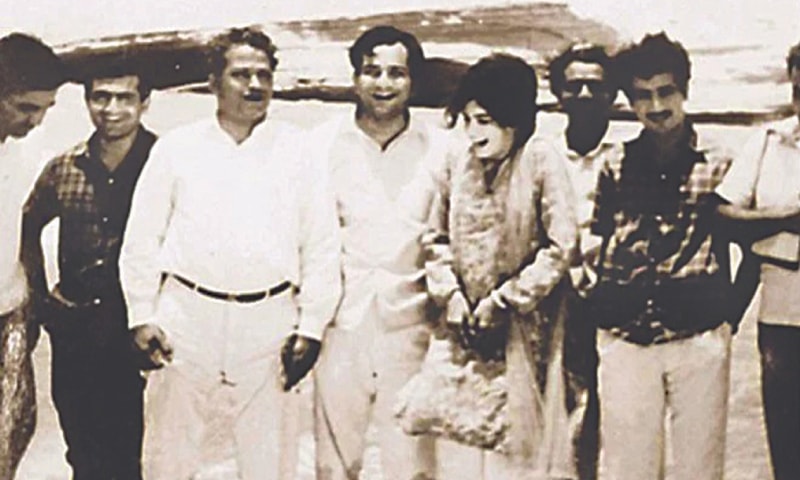
Released in 1967, the spy thriller was brutally chopped up by the censor board. With the Tashkent Accords of 1965 between Pakistan and India in place, there was also a clause which stated that both countries would discourage the use of any propaganda against each other. WKP was the first film that predicted the division of East Pakistan and West Pakistan.
On the brighter side, the movie introduced the legendary Mehdi Hasan to playback singing and helped Nisar Bazmi land more film offers. Saeed Fazli, a close friend of producer Rashid Mukhtar, also ghost-directed the Shabnam-Waheed Murad starrer Andaleeb. It helped the foreign-educated Fareed Ahmed, son of veteran producer W.Z. Ahmed, establish himself in the film industry.
Fareed got the credit as director of Andaleeb, and went on to make Suhaag, Bandagi and Angaaray. It was the rebirth of Shabnam as a film actress in West Pakistan. Hooted for her Bengali accent in Waheed Murad’s Samandar, Saeed Fazli had the Bengali beauty dubbed by a certain Kaukab Afzal in Andaleeb.
Rani, despite being considered ‘unlucky’, was also provided a second chance by Saeed Fazli. The dancing queen failed to bag a role in Fazli’s Chiragh Jalta Raha but a certain breach of contract made Saeed Fazli ask director/producer Hasan Tariq to sign Rani and Nisar Bazmi for his future productions. This turned out to be a blessing in disguise for Hasan Tariq, whose prominent movies subsequently all had the dances of Rani and music by Nisar Bazmi. Hasan and Rani eventually married in 1970, and churned out hits such as Anjuman, Tehzeeb and Umrao Jan Ada.
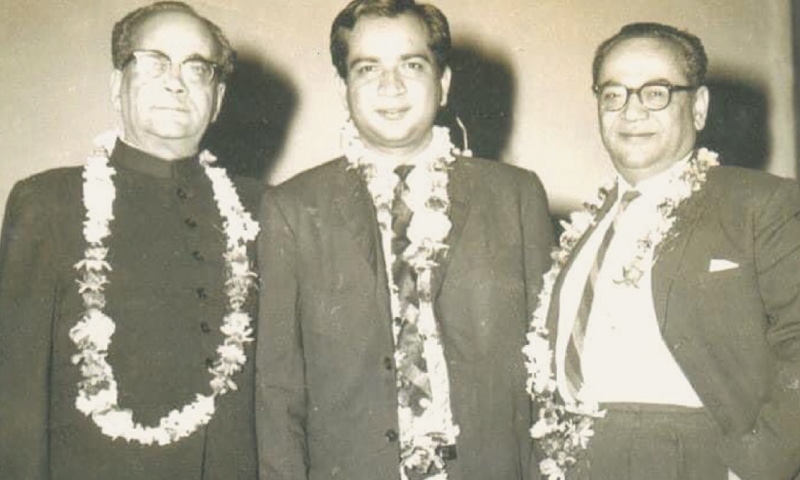
The prevailing political situation of the country was unacceptable to many, including Saeed Fazli, who had a special connection with the eastern wing of the country. As Fazl Ahmed Karim Fazli was an ICS officer from 1934-1952 in East Bengal, the family had substantial property over there. Most of Saeed’s siblings were born there and Saeed even had an East Pakistan domicile. With the secession of East Pakistan, the family lost its property and Saeed was only left with Alfalah Cinema in Lahore. Sadly, it was taken over by Nafdec — the National Film Development Corporation — after Zulfikar Ali Bhutto came to power. Fed up with the state of affairs, Saeed decided to move to the US in 1978.
With rarely any books available regarding the history of Pakistani cinema, and especially of the ‘50s and the ‘60s, Saeed Fazli was the one people like me would turn to for references. From the Jaal agitation of 1954 against Indian films, to the downfall of Aslam Pervez as a hero, from introducing me to the real Naushad, to being a confidante of Zeba and Muhammad Ali, he was a source of great inspiration and information.
Saeed was close to legendary Bollywood music director Naushad Ali. Considered to be a part of the music director’s family, Saeed Fazli used to drive 120 miles daily, from North Hollywood to Victorville, California just to meet Naushad who used to regularly visit his daughter based in Victorville, California. A great fan of Naushad, Saeed received an invitation to the Mughal-i-Azam premiere in Bombay, where the colourised version of the film was released in 2004. He certainly belonged to an era where respect was valued over money.
Since being struck down by Covid-19, Saeed was constantly in and out of hospitals. The last time we spoke was in the year 2019, and he asked my views on the Ali Zafar-Meesha Shafi controversy. Ali Zafar is married to Saeed Fazli’s niece, Ayesha Fazli.
Saeed Fazli also inquired from me about the exact date of his friend actor Muhammad Ali’s death and the well-being of another friend, director S. Suleman aka Sullo bhai, who later passed away. Sullo bhai had cried back then when I had mentioned Saeed Fazli to him, and he eagerly waited for Saeed’s call. Due to time zone constraints and issues with his hearing, Saeed Fazli never did manage to make the call.
He himself died on March 19 at age 88, exactly two years after his beloved friend S. Suleiman had passed away, and 17 years to the day after Muhammad Ali.
Published in Dawn, ICON, March 26th, 2023