ISLAMABAD: The country’s oil industry is reportedly in serious trouble in arranging crude oil and petroleum products owing to foreign exchange constraints and prevailing product pricing, particularly following the recent currency depreciation and increase in the central bank’s policy rate.
Reporting these challenges to the government, the Oil Companies Advisory Council (OCAC) – an association of more than three dozen major oil marketing companies (OMCs) and refineries – have warned of a major disruption to the already fragile supply chain.
In a communication to the ministers for finance and energy, the governor of the State Bank of Pakistan (SBP) and the chairman of the Oil and Gas Regulatory Authority (Ogra), the association has sought an urgent engagement to address the “severe impact of the recent depreciation of the rupee”.
The OCAC recalled that the oil industry had been requesting the ministries of energy and finance for developing a transparent mechanism for the complete recovery of foreign exchange losses in product pricing. It said the government should immediately revise the prices based on the current exchange rate but if it was not possible in the given challenging situation then at least a system should be put in place immediately.
Terms weak rupee, interest rate hike ‘unsustainable’
“We request development and immediate implementation of a holistic mechanism for recovery of industry’s exchange losses through inland freight equalisation margin (IFEM) to manage the situation and ensure industry’s survival”, the OCAC said.
The recent steep depreciation (of about Rs20 against the US dollar) had made the existing letter of credit (LC) lines inadequate for the industry, resultantly “there is a grave danger that import of crude and refined products may be disrupted”, the industry warned and highlighted that it was also a point of great concern for the industry that the cost of opening confirmed LCs has gone up many times, adversely impacting the profitability as this cost is not absorbed in the pricing.
Also, at current rupee-dollar parity and after the recent increase in SBP policy rates, simply maintaining 20 days’ mandatory stock cover as per OMCs licence requirement resulted in borrowing costs of more than 50pc of regulated margins. “In this extremely challenging environment, additional working capital burdens can raise significant concerns around OMCs being able to sustain operations”.
Moreover, the association also pointed out that its members had been doubly hit due to the erosion of equity from foreign exchange losses as well as a reduction in working capital lines due to an increase in the rupee-dollar parity coupled with a rise in international oil prices, particularly high-speed diesel. The OMCs have already reported about Rs35 billion cumulative losses in POL pricing in recent months.
It reported that the international price of petrol had increased by 3pc ($2.8 per barrel) to $94.84 per barrel between Jan 1, 2022 to March 2 while HSD prices surged by $15.48 or 18pc to $103.53 per barrel. During the same period, the rupee depreciated by over 61pc or Rs108.38 against the US dollar. This meant that oil prices and exchange rate changes required the oil industry’s needs to go up by 90pc than LC limits in local currency compared with last year to produce the same quantity of HSD.
Therefore, the oil industry called upon the government to ensure that the banking sector enhanced limits for oil companies and refineries, enabling them to manage the impact of increased oil prices and rupee depreciation that was critical for the survival of the sector and the integrity of the POL supply chain.
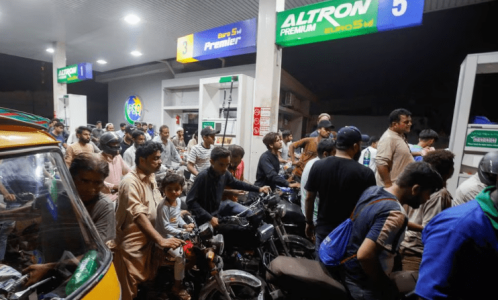
“The industry is on the brink of collapse, instances of fuel shortages in certain areas earlier this year highlight the fragile condition of the industry” for which only the government intervention on an urgent basis would ensure uninterrupted supplies”, the OCAC concluded.
Published in Dawn, March 8th, 2023