PML-N’s Miftah decries Pakistan’s lack of progress under any government

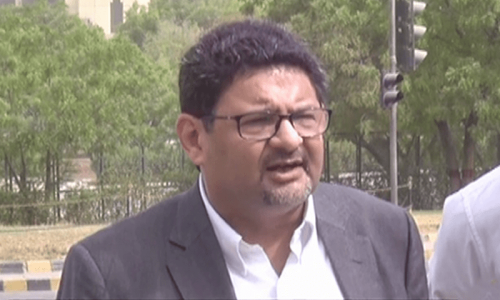
PML-N leader and former finance minister Miftah Ismail on Sunday bemoaned Pakistan’s lack of progress under any government.
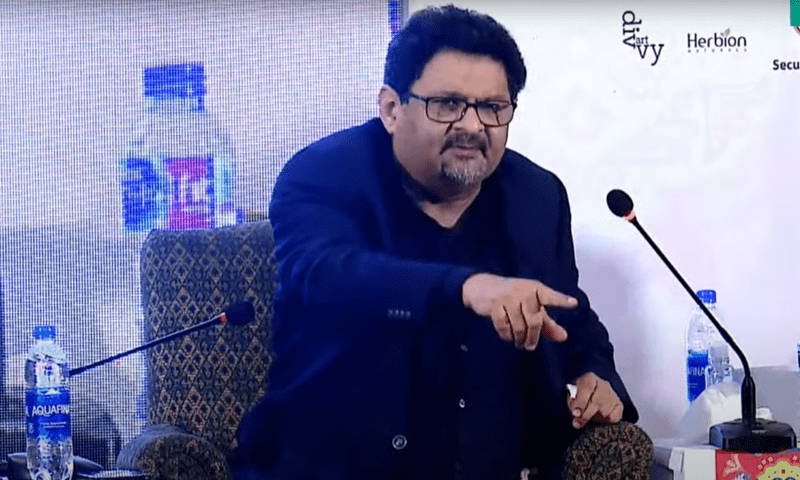
He made the remarks during a panel discussion titled “Pakistan’s Economy: Depth and Resilience” on the final day of the 14th Karachi Literature Festival held at Karachi’s Beach Luxury Hotel.
The panel also featured Habib Bank Limited (HBL) CEO Muhammad Aurangzeb, Institute of Business Administration (IBA) Karachi Executive Director Akbar Zaidi and Board of Investment Chairman Azfar Ahsan. The session was moderated by Samiullah Siddiqui.
The economic and finance experts came together to discuss the way forward for the country.
Ahsan stressed that Pakistan needed continuity in terms of governance and policies. “Elected governments must be allowed to complete their tenures. This is how we draw in investors,” he stated.
However, Ismail challenged Ahsan’s perspective, pointing out that Ziaul Haq and Ayub Khan completed tenures that lasted more than 10 years. “Did that bring any progress?” he asked.
“We have seen no progress under any government, whether it’s a military dictatorship or the PPP, PTI or PML-N governments.
“What we need are structural changes,” Ismail said. Quoting statistics on the lack of education in Pakistan, he emphasised the need for reimagining Pakistan for all, not just the “two per cent” elite.
Further, he also highlighted the importance of female participation, saying that the female workforce in Bangladesh had allowed the country to grow rapidly.
At one point during the session, the ex-minister was outraged when an audience member asked about government officials not curbing their own expenditures given the country’s financial situation.
“I’ve been to jail without being proven guilty of anything so I do not appreciate people telling me I’ve done something wrong,” Ismail said.
Meanwhile, Aurangzeb pointed out that the problem was not a lack of understanding of Pakistan’s economic issues but rather a matter of who would solve them and how.
He provided the example of Bangladesh’s model of progress. This, he said, included four main areas: population control, including women in the workforce, export-centric economy and creating special economic zones.
“They have 97 special economic zones. Exports hold the same importance as religion in Bangladesh,” he said.
“It’s a matter of timely execution. We need the right people, at the right place and at the right time,” Aurangzeb added. Calling it a “watershed” moment in Pakistan, he argued that the country must make drastic structural reforms.
The private sector must step up and stop asking the government for subsidies, he said. “Islamabad cannot give us what they don’t have.”
On the other hand, Zaidi pointed out the increasing class divide.
“How is Pakistan getting destroyed?” he asked, pointing out the record-breaking sales achieved by international coffee chain Tim Hortons on its opening day in Lahore.
“Banks are making record profits. The air force has ordered hundreds of BMWs. Countries that are on the brink of destruction do not spend like this.”
Ahsan strongly disagreed with Zaidi’s line of argument about banks making record profits. “Businesses are supposed to make money. If businesses don’t make money then how will they expand?” he asked.
He also opposed heavy taxation on businesses and banks.
The panel concluded that in order to come out of the current economic turmoil, Pakistan needed long-term structural reforms, focusing on three key aspects: eradicating incompetence, education and women empowerment.