Indian Supreme Court rejects plea to ban BBC coverage over Modi documentary furore


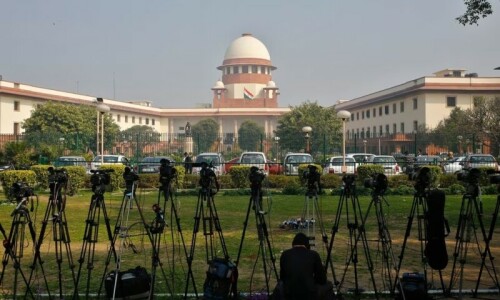
The Supreme Court of India has dismissed a petition filed by the Hindu Sena president requesting a ban on British Broadcasting Corporation‘s (BBC) coverage in the country and an investigation into the broadcaster’s “anti-India” rhetoric in reporting and films, Indian media outlets reported on Friday.
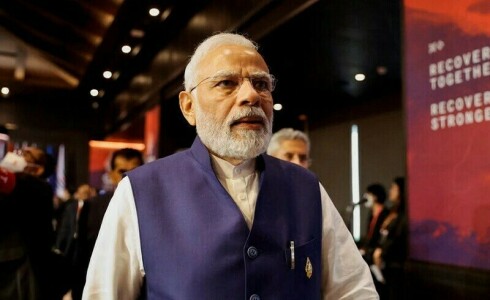
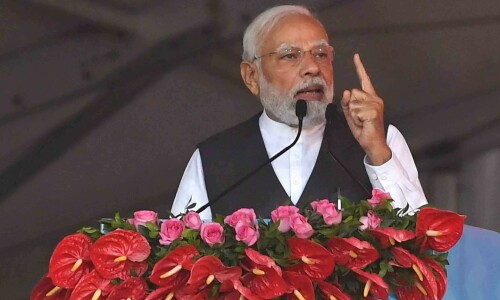
The BBC documentary revolves around Modi who was the chief minister of the western state of Gujarat when it was gripped by riots that left more than 1,000 people dead — most of them Muslims. The violence erupted after a train carrying Hindu pilgrims caught fire, killing 59.
Accused of failing to stop the rioting, Modi had denied the accusations and was exonerated in 2012 following an inquiry by India’s top court. Another petition questioning his exoneration was dismissed last year.
According to The Hindu, a two-judge bench comprising Justice Sanjiv Khanna and MM Sundresh rejected today the petition filed by Vishnu Gupta, terming it as “absolutely misconceived” and bearing “no merit”.
The report stated that the petitioner’s counsel Pinky Anand contended that the timing of the BBC documentary titled “India: The Modi Question” aimed to create “anti-India” propaganda at a time when the country was rising as an economic power.
It added that the petition pointed out that India was in such a position today that the British prime minister was also an Indian.
The report further said the Indian top judges questioned the petitioner’s counsel, asking: “What is this? Do you want us to put in place complete censorship?”
The petition stated the BBC film was “surreptitiously” intended to disturb India’s peace and national integrity, adding that the country had witnessed growth under Modi’s leadership since 2014.
Terming the BBC as an anti-India lobby, it also said the broadcaster could not digest the national growth of the country and claimed it was biased.
“A representation to the home ministry on January 27 has so far not yielded a response,” the petitioner said.
Last month, the Indian foreign ministry termed the documentary a “propaganda piece” meant to push a “discredited narrative”, spokesperson Arindam Bagchi had said a “bias”, “lack of objectivity”, and “continuing colonial mindset” was “blatantly visible” in it.
Shortly after, the Indian police had also detained students in New Delhi after stopping the screening of the BBC documentary.
The students at Delhi University had followed several campuses around the country in staging a broadcast, defying government efforts to stop its spread by blocking its publication on social media.
Police had swarmed the university after student groups supportive of Modi’s ruling party objected to the screening, seizing laptops and imposing a ban on assemblies of more than four people.