ISLAMABAD: The government put on a brave face amid a stalemate on securing a bailout from the International Monetary Fund (IMF), needed to avert a nearing sovereign default, as the two sides remained short of concluding external financing estimates and precise domestic fiscal measures.
A clear roadmap on external financing and domestic budgetary steps, coupled with substantial energy cost adjustments, should have led to sharing of a draft Memorandum of Economic and Fiscal Policies (MEFP) by the visiting IMF mission with the authorities at least a day before scheduled conclusion of talks on February 9.
“As of Wednesday night, we have not received the draft MEFP,” said a senior government official, adding Fund’s “reservations on final plan of action both in terms of fiscal measures and external funding sources were still there”.
The gap estimated by the IMF is on the higher side of $6bn for the current fiscal year.
Minister of state claims both sides ‘close to finalisation’; official says yet to receive draft memorandum
“We are very close to the finalisation,” said Minister of State for Finance and Revenue Aisha Ghaus Pasha while talking to journalists.
She said the MEFP would be handed over to Pakistan by the IMF once all issues are finally settled. She said a lot of things had been settled and they required clarity on some of them that the government team was trying to address.
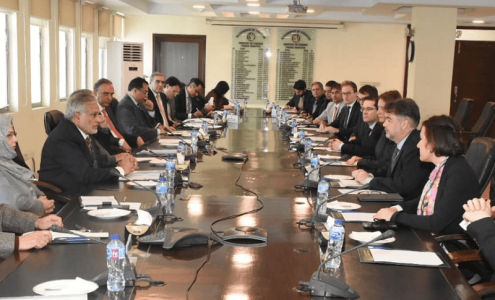
This was also confirmed by the Ministry of Finance. In a written statement, the ministry said the talks with the IMF continued on Wednesday and “focused on fiscal table, financing, etc. There is a broad consensus on the reform actions and measures”.
It added the mission chief also called on the finance minister and briefed him about the talks. “The mission is working on putting it all together and will finalise the MEFP,” said the finance secretary, who declined to comment on whether the scheduled talks would be extended to achieve a staff-level agreement.
Sources said the IMF had agreed to relax fiscal plan to the extent of about Rs500bn spending on flood recovery, leaving about Rs600bn worth of deficit in primary balance to be met through expenditure cuts and additional taxation measures.
The Fund was, however, still not confident about external financing commitments, particularly from the friendly countries — Saudi Arabia, the UAE and China — besides some other multilateral funding.
The IMF also wanted to see upfront implementation of increase in electricity and gas rates given the legacy of unfulfilled commitments. The government has agreed to the required power tariff adjustment to cover about Rs950bn gap for the current fiscal year, but had yet to work out precise burden for various categories and cross-subsidies to protected consumers and the extent of consumption under this category.
Informed sources said the visiting IMF mission, led by Nathan Porter, also had a virtual session with Prime Minister Shahbaz Sharif, besides a face-to-face engagement with Finance Minister Ishaq Dar.
The mission was assured of complete implementation of outstanding measures, including increase in electricity tariff of about Rs7.65 per unit in average base tariff, coupled with quarterly adjustments beginning with over Rs3 per unit and then scaling down.
The IMF mission is reported to have cleared gas tariff adjustment that should cover at least the flow of circular debt in the first go. That would mean about Rs100 per unit average increase in gas rates as determined by the Oil & Gas Regulatory Authority (Ogra).
Dr Pasha said the government was trying its best to insulate the common man from further burden of taxation or electricity tariff that would transferred to the people who had the capacity to pay and to keep the impact for common people at a the minimal if it is unavoidable.
She said the approval had been secured from the prime minister for upcoming decisions required under the fund programme because the fund agreement was Pakistan’s unavoidable necessity. She said the talks with the visiting mission were now heading towards conclusion.
Published in Dawn, February 9th, 2023