Iran intensifies crackdown on anti-govt protests


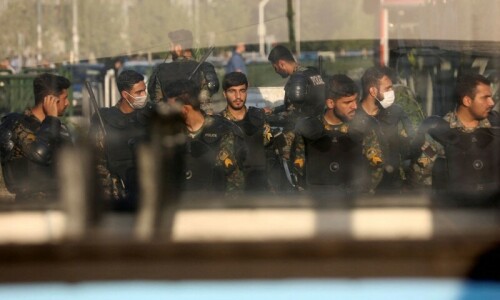
DUBAI: Iranian security forces intensified a crackdown on anti-government protests in several Kurdish cities on Monday, social media posts and videos showed, pressing efforts to quell unrest ignited by the death of a woman in morality police custody.
Protests have swept Iran since Mahsa Amini, a 22-year-old from Iran’s Kurdish region, died on Sept 16 while being held for “inappropriate attire”, marking one of the boldest challenges to the Islamic Republic since the 1979 revolution. According to BBC, the family of Amini said they have received death threats and have been warned not to get involved in the demonstrations.
“Our family have been under immense pressure from the Islamic Republic’s officials, so we don’t talk to human rights organisations or channels outside of Iran and inform anyone from the outside world about her passing,” her cousin Erfan Mortezai said in Iraq’s Kurdistan Region.
He said the threats that his family members have received have made them question their safety. “They are under Islamic Republic torture,” he added.
Family members of Amini claim they have received death threats
“The regime’s officials have threatened us through Instagram with fake accounts, and told the family members in Iran that if they get involved in the protests, they might be killed. Myself, I have been receiving many threats over the phone, [saying] that if they see me in the city, they will kidnap me and kill me.”
While university students in Iran have played a pivotal role in the protests with dozens of universities on strike, unconfirmed reports on social media showed workers at Abadan and Kangan oil refineries and the Bushehr Petrochemical Project had joined in.
An oil ministry spokesperson did not immediately reply to a phone call from Reuters seeking comment.
A combination of mass protests and strikes by oil workers and Bazaar merchants helped to sweep the clergy to power in the Iranian revolution four decades ago.
Meanwhile, Iranian authorities have returned the passport of Ali Daei, the country’s football legend confirmed on Monday, after confiscating it for supporting protests over Amini’s death.
“Upon my return from abroad, my passport was confiscated by police at Tehran’s international airport in the presence of my family and other people,” Daei said, in his first comments to the media since the beginning of the protests.
Published in Dawn, October 11th, 2022