ISLAMABAD: The National Assembly’s standing committee on finance on Friday took notice of record inflation and the rupee’s decline and directed the central bank to keep a vigilant eye on the rising trend.
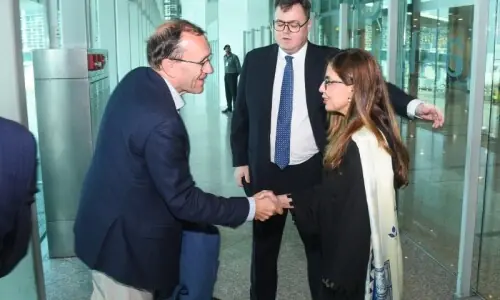
The committee, chaired by MNA Qaiser Ahmed Sheikh, discussed the effects of runaway inflation and a rapidly appreciating dollar and was briefed by State Minister for Finance Aisha Ghaus Pasha and State Bank of Pakistan (SBP) representatives.
The committee believed that the SBP should exercise its authority and bring the situation under control. Mr Qaiser noted that raising the interest rate was not a solution to control inflation and stressed the need to increase the inflow of dollars through exports.
However, an SBP representative told the committee that inflation was a huge problem and its root causes had to be addressed to tame it.
Aisha Ghaus Pasha insists uplifting economy needs structural changes, not quick fixes
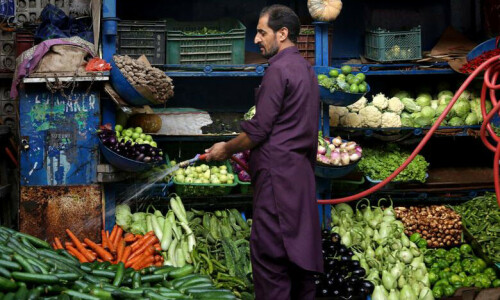
Noting that soaring global commodity prices and natural calamities had affected the supply chain, he said the central bank had increased the interest rate, restricted the import of luxury items and facilitated exporters and importers to mitigate the situation.
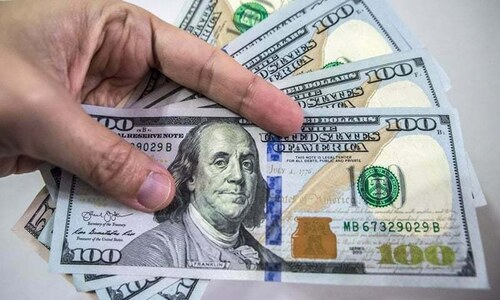
On the rising dollar, he said the SBP did not fix its price and the exchange rate was determined by the supply and demand on the international currency markets.
The central bank had taken several steps to check the dollar price in the open market, he said, adding that there was a significant difference between outflow and inflow of the US currency.
State Minister Pasha briefed the committee members on the government’s agreement with the International Monetary Fund for a bailout package, saying the loan programme was suspended by the lender after the previous government trampled on the agreements.
The minister insisted that the current government had thoroughly negotiated the agreement keeping in view the national interest.
Agreeing that the economy could not be uplifted by quick fixes, she called for structural changes and long-term policies to make the country’s economy vibrant and growth-oriented, listing circular debt management, income tax reforms and divesting shares of state-owned organisations as key measures.
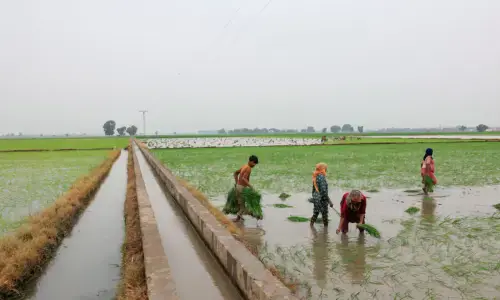
The minister noted that countrywide devastation followed by unprecedented flooding had dealt a blow to the country’s financial resources and funds had to be diverted to support flood-hit citizens.
Rehabilitating people and rebuilding infrastructure were uphill tasks, she said, noting that development packages would likely be redrawn.
On the flood relief and rehabilitation efforts of the National Disaster Management Authority (NDMA), the standing committee stressed the need to complete damage assessment surveys at the earliest so that the government could announce financial assistance packages for flood victims.
An NDMA representative briefed the committee about the extent of devastation caused by torrential rains and floods and relief operations through the NDMA, provincial disaster management authorities and social sector organisations.
Meanwhile, Ms Pasha stressed that the size of financial aid through the BISP social safety net had also been increased.
The committee decided to discuss the Modaraba Companies and Modaraba (Floatation and Control) (Amendment) Bill 2020 in its next meeting. It also didn’t discuss the Eradication of Riba Bill 2019 due to the absence of its mover, MNA Maulana Abdul Akbar Chitrali.
The committee also expressed its annoyance at the absence of the finance secretary and the SBP governor from the meeting and decided that it would not take up any government agenda in future in case relevant senior officers were absent without its permission.
The meeting was attended by MNAs Chaudhary Khalid Javed, Ch Muhammad Barjees Tahir, Ali Pervaiz, Makhdoom Syed Samiul Hassan Gillani, Syed Hussain Tariq, Engr Sabir Hussain Kaim Khani, Salahuddin Ayubi and Ramesh Kumar Vankwani, senior officers of finance and revenue divisions, SBP and other departments.
Published in Dawn, September 17th, 2022