KARACHI: The lucrative returns of up to 16 per cent failed to attract foreign investments in domestic bonds as the net outflow stood at little over $28 million in the first month of the current fiscal year.
The State Bank of Pakistan (SBP) on Monday reported that an inflow of just $3 million was recorded in treasury bills in July while the outflow was much higher at $31.085m. Both, the inflows and outflows were from the United Kingdom reflecting the poor performance of the domestic bonds.
Before the pandemic in 2020, foreigners were allowed to invest in domestic bonds which quickly attracted around $3.5 billion but most of the investments left the country as the country was hit by Covid-19 and since then no significant foreign investment returned to domestic bonds.
T-bills attracted an investment of $22m in June, the last month of FY22, while the outflow was $62.8m. However, the Pakistan Investment Bonds (PIBs) witnessed zero response from foreign investors during the month.
The regime change in Islamabad also impacted investor confidence as uncertainty that emerged out of this political change further hit the investment climate.
During the two months, March and April, no foreign investment was received in T-bills and PIBs rather massive withdrawals were made due to the highly uncertain political situation. On May 6, the country received $9.9m after a gap of almost two and half months.
The returns were attractive but the risks due to uncertain political instability barred foreigners to invest during the fiscal year FY22, instead, the outflows from the domestic bonds were over $1bn.
Foreign obligations met
The crisis of rupee depreciation and declining foreign exchange reserves have further fuelled the uncertainty as only investors from the UK were making and withdrawing money from these bonds.
However, Finance Minister Miftah Ismail has assured markets that the country will fully meet the foreign payments due in FY23 while he also reiterated his confidence that the IMF tranche of $1.2bn would be released soon.
At the same, he recently told the media that Pakistan would receive about $8bn from bilateral and multilateral creditors including IMF.
The cut-off yields on T-bills had been revised higher than the SBP policy rate of 15pc to make them more attractive. In July 27 auction, the three-month T-bills offered 15.74pc, six-month 15.8pc and 12-month 15.94pc.
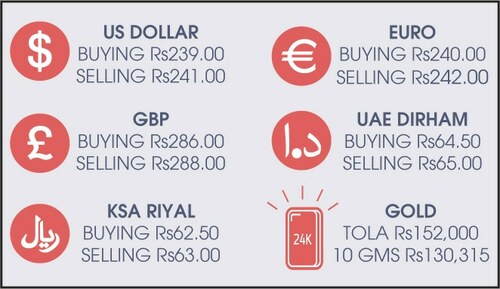
Bankers said the devaluation of local currency is a serious hurdle in attracting investment to T-bills as foreigner get their profits in rupee and they have to buy dollars from the market while the local currency has been losing against the greenback on a day-to-day basis.
The rupee depreciated by over 13pc against the dollar only in July.
The government papers received a total $341.2m (T-bills: $236.9m and PIBs: $104.3m ) while the outflows were $1.055bn in the entire FY22.
Published in Dawn, August 2nd, 2022