G20 finance talks end without joint communique



BALI: A two-day meeting of finance ministers from the Group of 20 major economies ended on Saturday in Indonesia without a joint communique after Russia’s war in Ukraine divided the global forum.
During talks on the Indonesian resort island Bali, the finance chiefs looked for solutions to food and energy crises, while accusing Russian technocrats of exacerbating the problems.
US Treasury Secretary Janet Yellen, Australian Treasurer Jim Chalmers and Canadian Finance Minister Chrystia Freeland on Friday blamed the invasion of Ukraine for sending a shockwave through the global economy. In place of a formal communique would be a 14-paragraph statement issued by Indonesia, the G20 chair’s Finance Minister Sri Mulyani Indrawati said in closing remarks.
She said there was consensus on most of the document but two paragraphs would focus on members’ differences regarding the war’s impacts and how to respond. “I think this is the best result,” she said. Members also discussed sustainable finance, cryptocurrencies and international taxation on Saturday.
Mulyani said “progress” was made on international tax rule changes that will set a global minimum corporate tax rate of 15 per cent by 2024.
No place at talks
At the beginning of the second day of talks, Indonesian central bank governor Perry Warjiyo called on ministers and global finance leaders to concentrate on recovery in a world economy reeling from the Covid-19 pandemic.
The meeting took place after the International Monetary Fund slashed its global growth forecast, with another downgrade expected this month as US inflation stokes fears of a recession.
But the talks have been overshadowed by the Ukraine war after it roiled global markets, caused rising food prices and added to breakneck inflation.
The Kremlin calls the war a “special military operation” and blames retaliatory Western sanctions for blocking food shipments and rising energy prices. Russian Finance Minister Anton Siluanov and Ukrainian Finance Minister Serhiy Marchenko participated virtually in the meeting.
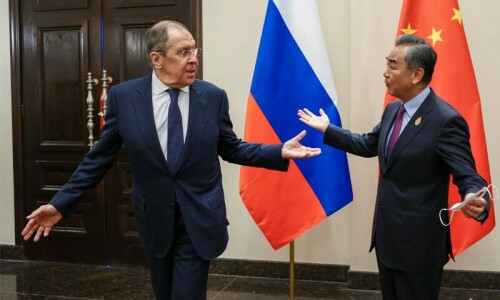
Russian Deputy Finance Minister Timur Maksimov attended the talks in person a week after Foreign Minister Sergei Lavrov walked out of a G20 meeting over Western criticism of the invasion.
Maksimov was in the room as Western officials expressed their condemnation, according to a source present. Marchenko called for “more severe targeted sanctions” against Moscow.
Published in Dawn, July 17th, 2022