Pakistan's water crisis to deepen with climate change


 0
0
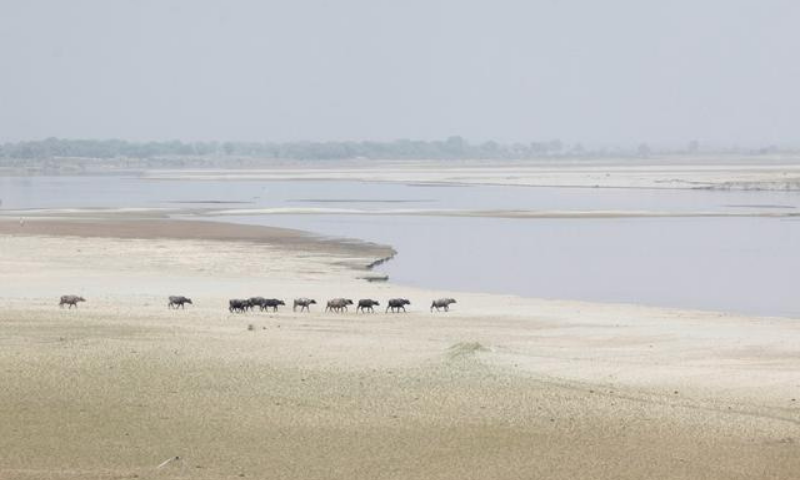
ISLAMABAD: Recording increase in the intensity and severity of droughts in Pakistan, the ‘Global Food Policy Report 2022’ has cautioned that summer heatwaves are projected to increase at a rate of 0.71 day per decade in the country, while in India it is estimated to triple or quadruple by 2100.
Released by the Washington-based International Food Policy Research Institute (IFPRI), the report says water scarcity in Pakistan is projected to worsen with climate change. Himalayan glaciers, an important source of rivers in South Asia, have lost more mass since 2000 than in the entire twentieth century, according to the report.
Of the world’s five basins where water scarcity-led GDP losses are projected to be highest, three (Indus, Sabarmati, and Ganges-Brahmaputra) are in South Asia. In the Indus Basin alone, GDP losses by 2100 are expected to exceed $5,000 billion, it estimates.
Global Food Policy Report 2022 records decline in rice, wheat yields in Pakistan
Climate change presents immediate and long-term challenges for South Asia such as glacier melt, sea-level rise, groundwater depletion, extreme weather events, and frequency of natural hazards that are likely to worsen in coming decades. The report warns that South Asia’s pre-existing vulnerabilities — high levels of poverty, governance challenges, and limited access to basic services and resources — amplify the region’s climate risks, with potentially devastating effects if warming continues at this pace.
The unprecedented suite of climatic changes has also caused crop yield decline and production losses in the region, with a few exceptions for certain crops and sub-regions. In Pakistan, decline in rice and wheat yields are observed with climate change though the use of heat-tolerant varieties has provided some resilience and forestalled greater impacts.
Published in Dawn, May 17th, 2022