0
0

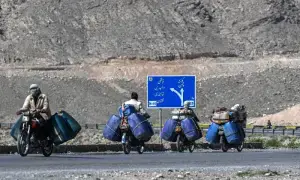
PESHAWAR: A little over 100 Afghan nationals returned from Pakistan between Jan 1 and April 30 this year underscoring the long-held concerns among refugees about their physical and economic security in their own country.
The voluntary repatriation drive with the spring being its peak season is assisted by the United Nations High Commissioner for Refugees (UNHCR).
Only 24 families (100 individuals, roughly five per family) had left for Afghanistan through the programme from Jan 1 to April 30.
Qaiser Khan Afridi, spokesperson for the UNHCR Pakistan, said the declining number of refugees repatriating from Pakistan was a reflection of the current humanitarian and economic challenges in Afghanistan.
UNHCR attributes trend to security, economic issues in Afghanistan
According to the UNHCR’s Voluntary Repatriation Response Snapshot posted on the refugee agency’s website, the number of Afghan refugees repatriating between Jan 1 and March 31 is 57. “This is 76 per cent lower compared to the 308 persons that returned to Afghanistan during the same period in 2021.”
The trend is in keeping with the growing concern among refugees about security situation back home.
Gareeb Gul, an Afghan vegetable seller in the Board Bazaar, Peshawar’s largest refugee commercial and residential hub, said the security situation after the Taliban takeover of Afghanistan had become more dangerous.
“I cannot think of going back home. I came to Peshawar 10 years ago. I earn good money that I send home to support my family in Jalalabad. There is neither security nor economic opportunity in Afghanistan. People are coming to Pakistan and other countries to seek work and safety,” he said.
The seller rejected the notion that peace had returned to Afghanistan after the Taliban takeover and insisted that Afghan nationals continued to leave the country.
The UNHCR that advocates voluntary repatriation of refugees had released a non-return advisory for Afghanistan in August 2021, the month when the Taliban took over power in Kabul. The advisory was updated again in Feb 2022.
“In line with this advisory, UNHCR continues to call on states to suspend the forcible return of Afghan nationals,” said Afridi.
“In recognition of the individuals’ fundamental human right to return to their country of origin, the UNHCR provides assistance to refugees who, being fully informed of the situation in their places of origin or an alternative area of their choice, choose to voluntarily return,” he said.
The spokesman said respecting the refugees’ right to return to their country, the UNHCR might facilitate voluntary repatriation when refugees indicated a strong desire to return voluntarily and do so on their own initiative.
“The UNHCR advocates that returns need to be voluntary and take place in conditions of safety, dignity and security.”
According to him, on return to Afghanistan, the UNHCR provides repatriated families with a financial grant of $250 per head to support them to rebuild their lives and communities.
The UNHCR’s voluntary repatriation programme registered the highest number of returnees to Afghanistan in the year 2002, including refugees from Pakistan, Iran and other countries. The numbers have been gradually dropping since. A total of 5, 272, 158 Afghan refugees have returned to Afghanistan between March 2002 to March 2022, according to UNHCR’s Voluntary Repatriation Response Snapshot.
Pakistan has been hosting one of the world’s largest refugee population for more than four decades. Presently, around three million Afghan nationals live in the country of which around 1.4 million are registered refugees that hold the Proof of Registration Card provided by the UNHCR.
In addition, around 800,000 Afghans hold Afghan Citizen Card provided by Pakistan to facilitate their stay, while there are nearly 1 million unregistered Afghans in the country, living without the official Proof of Registration or Afghan Citizen Card.
The National Database Registration Authority with the assistance of the UN refugee agency has completed the renewal of PoR cards and final data is being compiled.
Officials said the new data would determine the number of registered refugees in Pakistan.
Published in Dawn,May 6th, 2022