
Plants purify the air, relax us, and there are many benefits to having indoor plants. But some common ones that we love are actually deadly, and poisonous, not just for humans but animals too.
Adults usually have enough sense not to nibble on houseplants, but children and pets have been known to give them a try, and the results can be far from benign. When tending and re-potting plants, gloves should be worn, and you must try and avoid accidental brushing of sweat or hair out of your eyes, sipping a cold drink or answering the phone, and possibly transferring toxic plant sap in the process.
Handling potentially harmful, and in some cases lethal plants, is the same as handling a toxic substance. Just because a plant doesn’t display a warning sign, it doesn’t mean it is safe to handle. On the contrary, plants — toxic or not — should always be handled with extreme care, as you can have an allergic reaction to a plant species that isn’t even toxic at all.
If you know for certain, or even suspect plant poisoning may have occurred, seek medical or veterinary help on an emergency basis. Take a sample of the suspected plant with you, for identification purposes, to avoid any confusion about its name.

Here are some prime examples of plants, no matter how easy they are to grow, that we should really avoid having around, either indoors or out:
These plants are often pretty as can be, but should be grown and handled with extra caution because of their toxicity
Dieffenbachia/dumb cane: One of the most popular house and patio plants around, probably because it is so easy to grow and simple to propagate, also happens to be one of the most dangerous. All parts of this pretty plant contain high levels of calcium oxalate, which is especially concentrated in the sap. If the sap, or any other plant part, comes into contact with the lips, tongue and mouth, serious swelling may occur. The plant toxins can, as its common name implies, literally strike you dumb.
Spathyphyllum/ peace lily, syngonium podophyllum/ arrowhead plant, Caladium hortulanum/ elephant ear and Anthurium/ flamingo flower: Same as dieffenbachia.
Sanseveria/ mother-in-law’s-tongue/ snake plant, philodendron species, schefflera species, monstera deliciosa/ Swiss cheese plant, Pothos/ devil’s ivy/ money plant: Same as dieffenbachia. Ingestion causes nausea and vomiting.
Cycas revolute/ sago palm: All parts of this plant are toxic, especially the seeds, in which toxins such as cycasin and beta-methylazoxymethanol-L-alanine, which is a neurotoxin, accumulate. There is also an unidentified toxin which attacks the central nervous system. Vomiting and diarrhoea with blood are common symptoms of cycas poisoning. Despite its toxicity, both cats and dogs tend to be attracted to this plant, especially to its seeds.
Begonia rex/ king begonia: Same as dieffenbachia. Ingestion can lead to kidney failure.
Euphorbia milli/ crown of thorns: The sap causes skin irritation and irritation/ burning of mouth and eyes, which are increased by exposure to sunlight. This is generally true for all members of the Euphorbia family of plants.
Codiaeum variegatum/ Croton: Sap is toxic if ingested and can cause excessive salivation and digestive upset.
Cyclamen species: Ingesting the rhizomes which contain cyclamine may result in vomiting, seizures, arrhythmia, and could lead to death.
Solanum pseudocapsicum/ Jerusalem cherry: The fruits are high in solanine, a highly toxic glycol-alkaloid. Ingestion causes burning in the mouth and throat, high fever, stomach pain, and diarrhoea.
Hedera/ ivy: Leaves and berries contain hederin. Ingestion results in burning in the mouth and throat, vomiting, and diarrhoea.
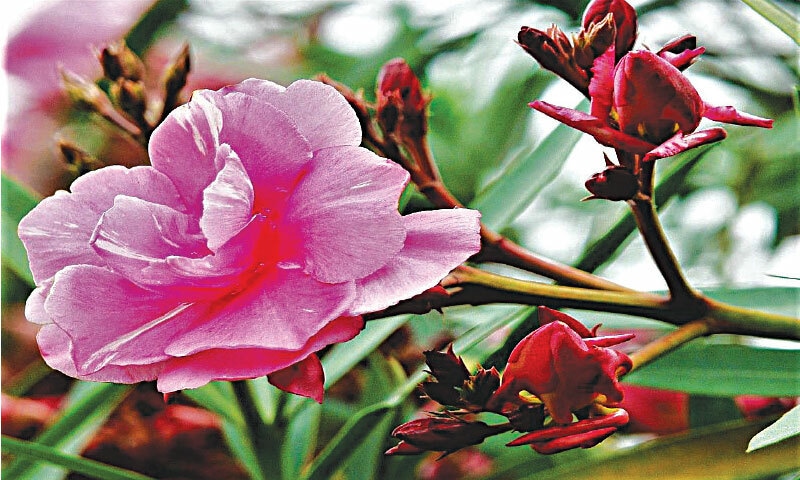
Nerium oleander/ Kaner: One of the most poisonous plants in existence, all parts of this gorgeous shrub are lethally toxic, including its sticky, white sap and beautifully fragrant flowers. Eating as much as a single leaf or seeds that resemble peas in a pod, will cause heart failure, and death. Oleander wood, stems and leaves should never be added to a compost heap after pruning. Nor should they be burnt as the resultant smoke is poisonous too. Despite the inherent dangers of growing this lethally toxic shrub, it continues to be widely sold in our nurseries, planted in parks, around children’s playgrounds, used in government beautification programmes, and in roadside/ greenbelt plantings.
Please continue sending your gardening queries to zahrahnasir@hotmail.com. Remember to include your location. The writer does not respond directly by email. Emails with attachments will not be opened
Published in Dawn, EOS, February 20th, 2022