US has no choice but to work with Pakistan, says envoy



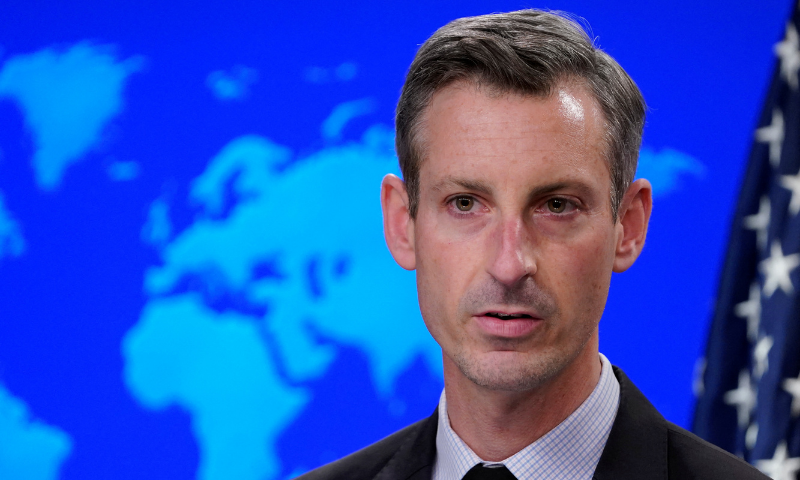
WASHINGTON: The United States has no choice but to work with Pakistan on the way ahead in Afghanistan, says a senior US official while elucidating the Biden administration’s new policy for the region.
At a discussion at the US Institute of Peace in Washington on Tuesday afternoon, US Special Representative for Afghanistan Tom West acknowledged Pakistan’s role in arranging a peace deal with the Taliban but also complained that Islamabad often ignored Washington’s suggestions.
“I have productive, good and honest relationships with Pakistani leaders, and they have huge amounts of expertise in their system on these (Afghan) matters,” he said. “And I think we don’t have a choice but to work with Pakistan on the way ahead.”
He was the only speaker at this discussion which focused on US consultations with the Taliban, other Afghans and the international community since the Taliban takeover.
The moderator, former US National Security Adviser Stephen J. Hadley, however, also asked a set of questions about US-Pakistan relations, differences between Islamabad and Kabul’s new rulers and the Taliban’s position on TTP and the Durand Line.
“During the life of the negotiations, from January to August, and in the years before, we were in very close touch with the leadership of Pakistan regarding steps that we urged Pakistan to take to enhance the prospects of a negotiated settlement to this conflict,” Mr West said.
“Had Pakistan taken some of those steps in a more meaningful and consistent way, I think we would be in a different place today. I genuinely do.”
The response made it clear that while Pakistan supported the peace process, it did not always accept US proposals. Mr West also made it clear that Islamabad’s reluctance often irked Washington, although the two allies continued to support the Doha talks that led to an agreement in 2020.
“Now, it’s a mark of our pragmatism, in my view, that in Washington you are not hearing leaders from across the spectrum spending time and energy criticising Pakistan and looking backwards,” he said.
Mr West, however, indicated that despite these reservations, Washington wants to continue its cooperation with Pakistan on Afghanistan and other issues.
“I frankly think that that energy (criticising Pakistan) is not called for given the situation in Afghanistan today,” he said.
Islamabad’s reluctance, according to Mr West, has added to the difficulties that Pakistan now faces in Afghanistan. “I think when it comes to Pakistan’s interests in Afghanistan today, they face challenges. They face real challenges of capacity,” he said.
Published in Dawn, February 17th, 2022