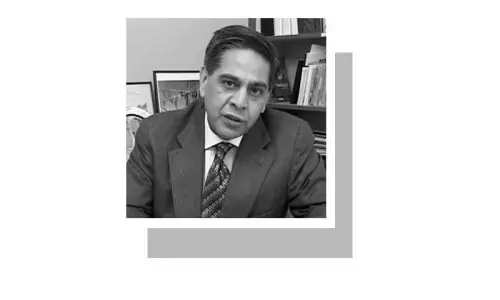
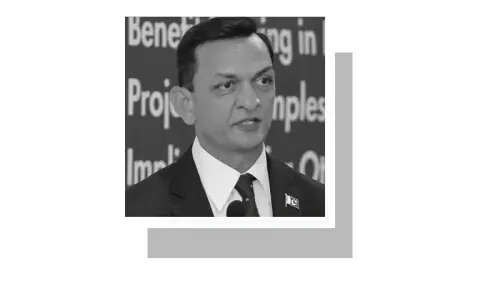
NATIONAL Security Adviser Moeed Yusuf has concluded his two-day visit to Kabul — his first to the Afghan capital since the Taliban takeover last August. The visit was originally scheduled for earlier this month but was put off when a senior delegate accompanying the NSA tested positive for Covid.
Dr Yusuf, who heads the Afghanistan Inter Ministerial Coordination Cell, met acting Deputy Prime Minister Abdus Salam Hanafi and acting Foreign Minister Amir Khan Muttaqi to discuss humanitarian requirements and Pakistan’s proposals for strengthening the economic engagement to help Afghanistan tackle its financial challenges.
An official announcement by the Prime Minister’s Office said that the visit resulted in “substantive outcomes” in terms of forward movement on trade facilitation and social sector support. Both sides also reiterated their commitment to the early completion of three major connectivity projects.
Recognising the collapse of the formal banking system in Afghanistan, they have agreed to start barter trade and encourage trade in local currency. In the absence of formal recognition for the hard-line Afghan Taliban regime by the international community, particularly the major powers, multinational and multibillion-dollar projects are not likely to materialise unless the new rulers agree to respect human rights including those of women and minorities.
It is encouraging to see the international community finally waking up to the humanitarian crisis and desperately needed assistance starting to flow into Afghanistan; it seems a way has been found to get around international sanctions targeting the Taliban. But much remains to be done.
Notwithstanding Pakistan’s own economic challenges, as Afghanistan’s immediate neighbour, this country cannot afford to sit on the fence, watch the economic situation deteriorate next door and face another round of exodus from there. The formal agreement on border trade and trade in local currency will no doubt mitigate some of the challenges of the larger agrarian population in Afghanistan.
As the statement indicates, no discussion appears to have taken place between the two sides regarding Pakistan’s twin security challenge emanating from Afghanistan: incidents of border-fence breaching and an uptick in TTP-linked terrorist attacks. Clearly, both sides want to keep such sensitive matters away from the public discourse, as is evident from an unpublicised visit of Pakistan’s special envoy for Afghanistan Ambassador Muhammad Sadiq to Kabul earlier last month. These engagements indicate that as far as the two sides are concerned, things are moving in the right direction, though time alone will tell how much of the effort will yield results.
Published in Dawn, February 1st, 2022